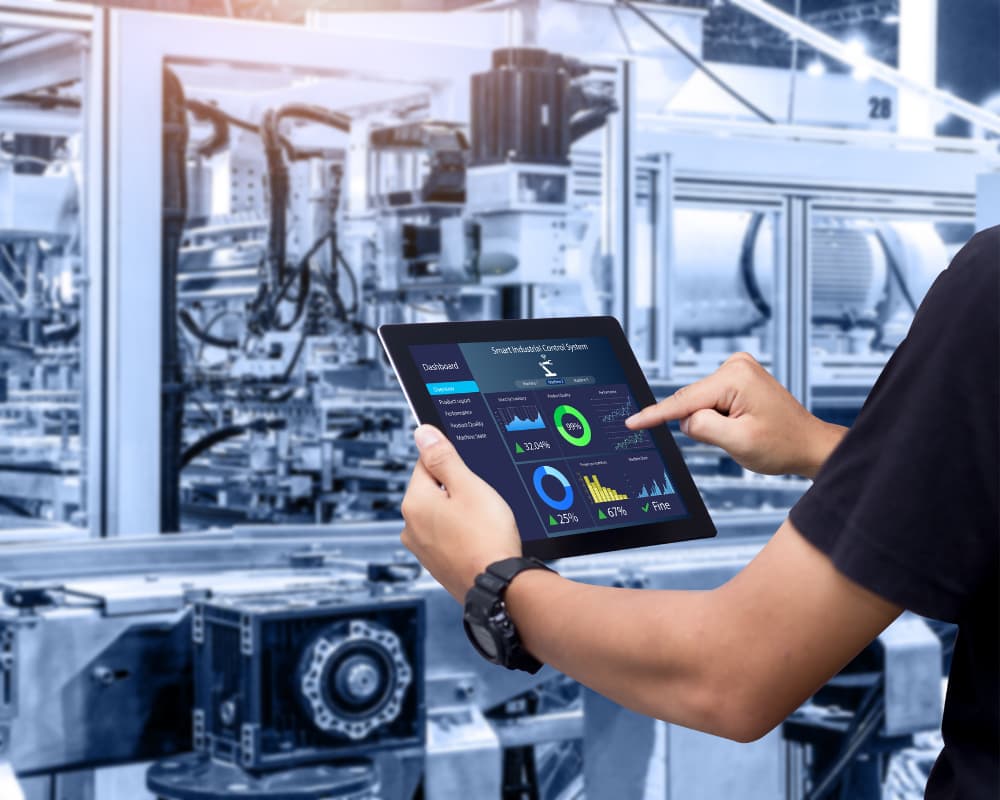
The demand for zero-defect production in smart manufacturing has accelerated the adoption of computer vision manufacturing. By equipping industrial machines with the ability to “see,” analyze, and interpret visual data, this technology, powered by Artificial Intelligence (AI), is transforming quality assurance from a manual, intermittent process into a continuous, automated, and hyper-accurate system. This radical shift, often termed AI quality control, is fundamentally changing the economics of production by drastically improving product accuracy and reliability through sophisticated defect detection.
Introduction to Computer Vision in Manufacturing
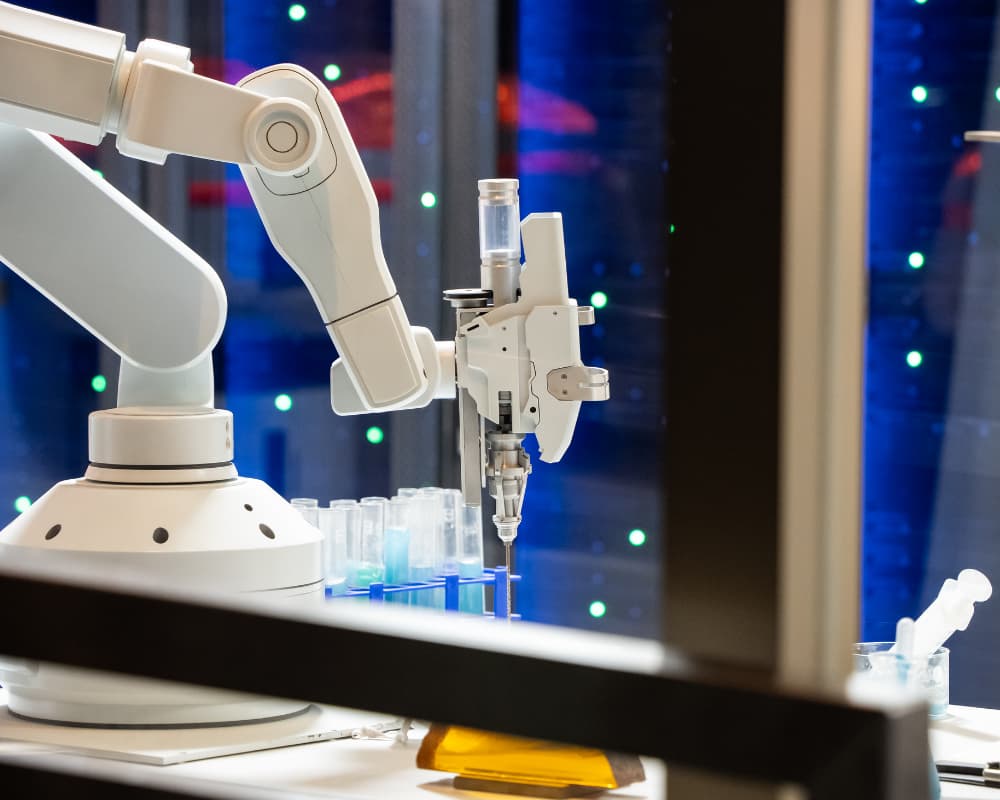
The integration of visual intelligence is critical for the next wave of industrial automation, allowing factories to achieve self-optimization.
What Is Computer Vision?
Computer vision is an interdisciplinary field that enables computers and software systems to gain a high-level understanding from images or videos. It involves methods for acquiring, processing, analyzing, and understanding visual data to produce numerical or symbolic information. In a manufacturing context, computer vision systems use high-resolution cameras and advanced algorithms, particularly deep learning models, to emulate human sight—but with superior consistency, speed, and precision. It essentially provides the “eyes” for industrial automation, allowing machines to interpret their surroundings and the products passing through the line.
Key Benefits for Manufacturers
The benefits of integrating computer vision manufacturing solutions are numerous and profound. The most immediate advantage is unwavering consistency. Unlike human inspectors who suffer from fatigue, distraction, and variability in judgment, AI-powered systems maintain 100% focus across multiple shifts, ensuring every single unit is inspected to the exact same standard. This leads to unparalleled accuracy in defect detection. Furthermore, these systems operate at the speed of the production line, often inspecting thousands of units per minute, which is impossible with manual methods. Ultimately, this enhanced AI quality control reduces waste, minimizes rework, and lowers labor costs associated with manual inspection.
Applications in Quality Control
The most critical application of computer vision manufacturing is the transformation of quality control from a bottleneck to a performance accelerator.
Automated Defect Detection
The core function of AI quality control is automated defect detection. Traditional machine vision was limited to finding known flaws based on rigid, programmed parameters (e.g., checking if a hole is present). Modern systems, powered by deep learning, can identify a vast array of defects that were never explicitly programmed, including micro-cracks, subtle surface irregularities, uneven coating thicknesses, or misaligned components. The AI models learn what a “good” product looks like from thousands of examples and flag any product that deviates from this learned standard as an anomaly, providing a robust solution for catching subtle flaws that would be invisible to the human eye.
Real-Time Product Inspection
The speed of AI processing means that inspection can occur simultaneously with production, a concept known as real-time product inspection. Cameras capture images or video streams of products as they move rapidly down the conveyor belt. The computer vision manufacturing system processes the image instantly, classifying the unit as “pass” or “fail” within milliseconds. If a defect is detected, the system immediately communicates with the production line’s control system to trigger an automated response, such as diverting the faulty part into a reject bin or alerting the upstream machine that is causing the error. This closed-loop feedback mechanism prevents defective products from progressing further down the line, drastically reducing material waste and preventing further non-value-added work.
Technologies and Tools
The sophisticated capabilities of modern computer vision manufacturing systems are built on specialized software and robust hardware components.
AI Models and Image Recognition Systems
The brain of the system relies on specialized AI models and image recognition systems, particularly Convolutional Neural Networks (CNNs). CNNs are a type of deep learning algorithm uniquely suited for processing visual data. These models are trained using vast, annotated datasets of both defective and non-defective images, allowing them to learn complex features—textures, edges, and shapes—that define product quality. Techniques like object detection and image segmentation are used to not only classify a part as faulty but also to precisely locate the defect down to the pixel level, providing valuable data for root cause analysis.
Integration with Industrial IoT
For computer vision manufacturing to be effective, it must be fully integrated into the Industrial IoT (IIoT) ecosystem. The high-resolution cameras and sensors used for visual inspection are simply specialized IIoT devices. They stream visual data across the network to edge computing devices or cloud platforms. Crucially, the inspection data is then correlated with other sensor data, such as machine vibration, temperature, and torque. This integration allows AI quality control to not just detect a defect, but to link it to the specific machine condition or process deviation that caused it, transforming simple inspection into powerful predictive analytics.
Industry Examples
The application of computer vision manufacturing is widespread, delivering powerful results in high-stakes, high-volume environments.
Electronics and Precision Engineering
In the electronics and precision engineering sectors, component scale demands automated inspection. AI quality control is essential for verifying circuit board assembly, where systems check for missing components, incorrect polarity of chips, and faulty solder joints with microscopic accuracy. For semiconductors, computer vision is used at the wafer level to detect minute material defects or irregularities in lithography patterns. These flaws are often impossible to see with the naked eye, highlighting how computer vision manufacturing enables the exacting standards required for modern microelectronics.
Automotive Component Inspection
The automotive component inspection sector relies heavily on AI vision for structural and aesthetic integrity. Computer vision manufacturing systems are used to inspect critical components like weld seams on car bodies, ensuring structural integrity by detecting tiny porosities or incomplete penetration. For exterior parts, AI checks paint finishes for microscopic scratches, bubbles, or color inconsistencies. Furthermore, complex assemblies, such as gearbox internals or engine heads, are inspected to verify the presence, alignment, and correct sequencing of all internal parts, mitigating the risk of costly failures and safety recalls.
Future Developments
The evolution of computer vision manufacturing is moving toward fully adaptive and autonomous quality management systems.
Deep Learning and Adaptive Vision Systems
The future of AI quality control lies in deep learning and adaptive vision systems. These systems will feature unsupervised or semi-supervised learning, allowing them to continuously improve their defect detection capabilities on the job with minimal human intervention. Instead of requiring thousands of labeled images for every potential defect, future systems will use anomaly detection algorithms to flag any deviation from the norm, even if the deviation is a defect type never seen before. This adaptability will allow vision systems to handle the frequent product variations common in high-mix, low-volume manufacturing environments.
Towards Fully Automated Quality Control
The ultimate goal of computer vision manufacturing is the realization of fully automated quality control. This scenario envisions AI systems not only inspecting products but also automatically managing the entire quality loop. The system will detect a defect, diagnose its root cause using integrated process data, implement a corrective action (e.g., automatically adjusting the material feed rate or increasing the curing temperature), and verify the corrective action’s success—all without human input. This represents the peak of industrial automation, ensuring that quality is guaranteed by the self-correcting intelligence of the smart manufacturing system.