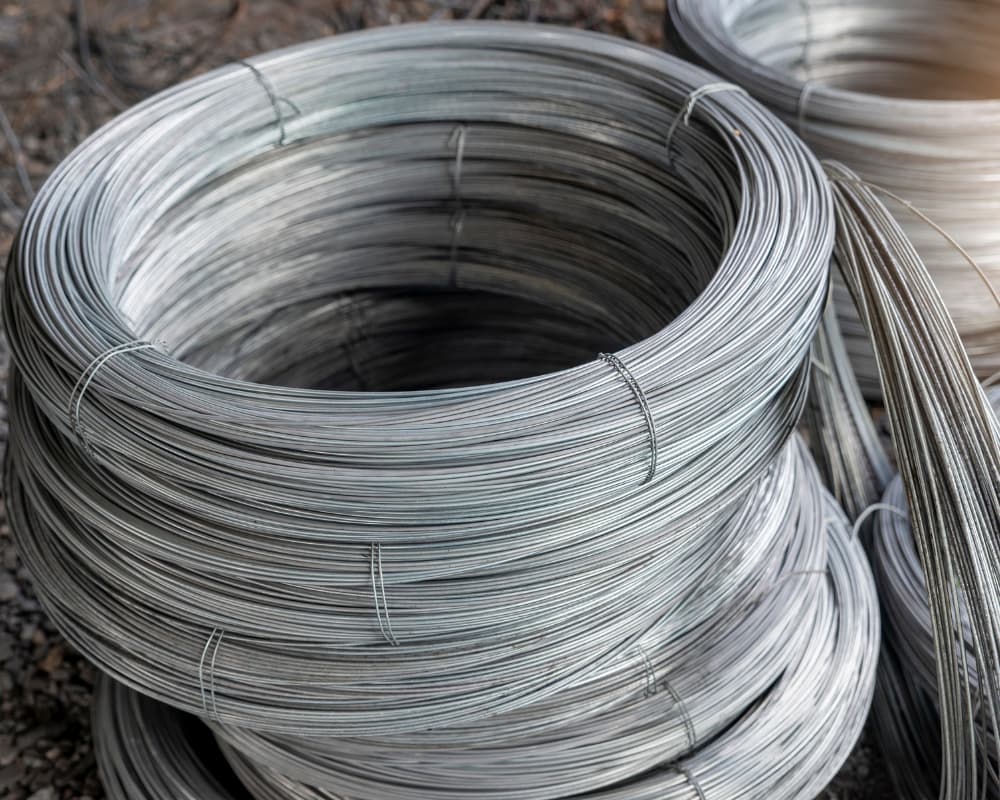
The global steel wire market is entering a period of robust expansion, supported by technological advancements, evolving industrial requirements, and sustained investment across infrastructure, energy, and manufacturing sectors. As end users increasingly demand stronger, lighter, and more corrosion-resistant materials, steel wire producers are responding with advanced processing techniques and innovative product solutions that are reshaping the market’s competitive landscape.
According to market projections, the steel wire industry is expected to reach a value of approximately $153.26 billion by 2030, growing at a compound annual growth rate (CAGR) of 6.1% over the forecast period. This growth trajectory is underpinned by rising demand for high-performance steel wire products, particularly those offering enhanced durability and resistance to corrosion. The widespread adoption of advanced coating and galvanizing technologies has further strengthened the appeal of steel wire across demanding applications.
In parallel, global investments in renewable energy projects, power transmission infrastructure, and utility networks are driving increased consumption of lightweight yet high-strength wire materials. Precision-engineered steel wire solutions are also gaining prominence, supporting applications that require tight tolerances and consistent mechanical performance. Key trends shaping the market through 2030 include expanding infrastructure development, growing use of galvanized and coated wire, and the shift toward durable materials that combine strength with reduced weight.
The steel wire market is characterized by the presence of numerous global and regional players with diversified product portfolios. Major companies active in the sector include ArcelorMittal, Nippon Steel Corporation, HBIS Group, JFE Steel Corporation, Bekaert SA, Tata Steel, JSW Steel, Kobe Steel, WireCo WorldGroup, Baowu Steel, Nucor Corporation, Aperam, Ternium, Emirates Steel, Qatar Steel, Ezz Steel, and many others across Europe, Asia, the Middle East, Africa, and the Americas.
These companies compete on the basis of product quality, coating technologies, customization capabilities, and supply reliability. Strategic investments, capacity expansions, and acquisitions continue to play a critical role in strengthening market positions and expanding geographic reach.
Industry consolidation remains an important theme, illustrated by a notable transaction in July 2025, when Guatemala-based Grupo AG acquired the steel wire solutions segment of Bekaert S.A. for $73 million. The acquisition was aimed at reinforcing Grupo AG’s footprint in Latin America’s competitive steel wire market while broadening its offerings for construction, agricultural, and industrial applications.
Bekaert, headquartered in Belgium, is widely recognized for its expertise in steel wire transformation and coating technologies. By integrating these capabilities, Grupo AG has enhanced its technical portfolio and positioned itself to better serve regional demand with higher-value wire products.
Technological innovation is a central driver of differentiation within the steel wire sector. Manufacturers are increasingly adopting advanced heat treatment and processing methods to improve strength, flexibility, and fatigue resistance. One prominent example is induction-tempered high-tensile steel wire, produced through controlled induction heating followed by rapid cooling. This process results in wire that offers superior mechanical performance while enabling weight reduction and longer service life.
Such high-performance steel wire is finding growing use in demanding sectors including automotive manufacturing, construction reinforcement, and power transmission. In April 2025, Bansal Wire Industries Ltd. of India inaugurated a new manufacturing facility in Dadri, Uttar Pradesh, dedicated to the production of induction-tempered high-tensile steel wire. The plant incorporates advanced wire processing technologies and emphasizes sustainable manufacturing practices, delivering corrosion-resistant products tailored for infrastructure, energy, and automotive applications while minimizing energy consumption and material waste.
The steel wire market is broadly segmented to address a wide range of material and application requirements. By type, the market includes carbon steel, alloy steel, and stainless steel wire. Thickness categories range from 0.01 mm to 0.8 mm, 0.8 mm to 1.6 mm, 1.6 mm to 4 mm, and above 4 mm, while product forms are classified as rope and non-rope wire.
End-use industries span construction, automotive, energy, industrial manufacturing, and other specialized sectors. Further segmentation highlights subcategories such as low-, medium-, and high-carbon steel wire; low- and high-alloy steel wire; and stainless steel wire types including austenitic, ferritic, and martensitic grades. These classifications enable manufacturers and buyers to align product specifications closely with performance and regulatory requirements.
While regional data varies, the global steel wire market continues to benefit from strong demand across Asia-Pacific, North America, and Europe, with emerging economies playing a particularly important role. Large-scale infrastructure projects, expanding automotive production, and energy transition initiatives are fueling consumption in developing regions, while mature markets focus on advanced manufacturing techniques and sustainable material solutions.
As the industry moves toward 2030, continued innovation, strategic acquisitions, and investment in high-performance and environmentally responsible steel wire products are expected to remain central to market growth. Together, these factors position the steel wire sector for sustained expansion and increasing relevance across a broad spectrum of industrial applications.