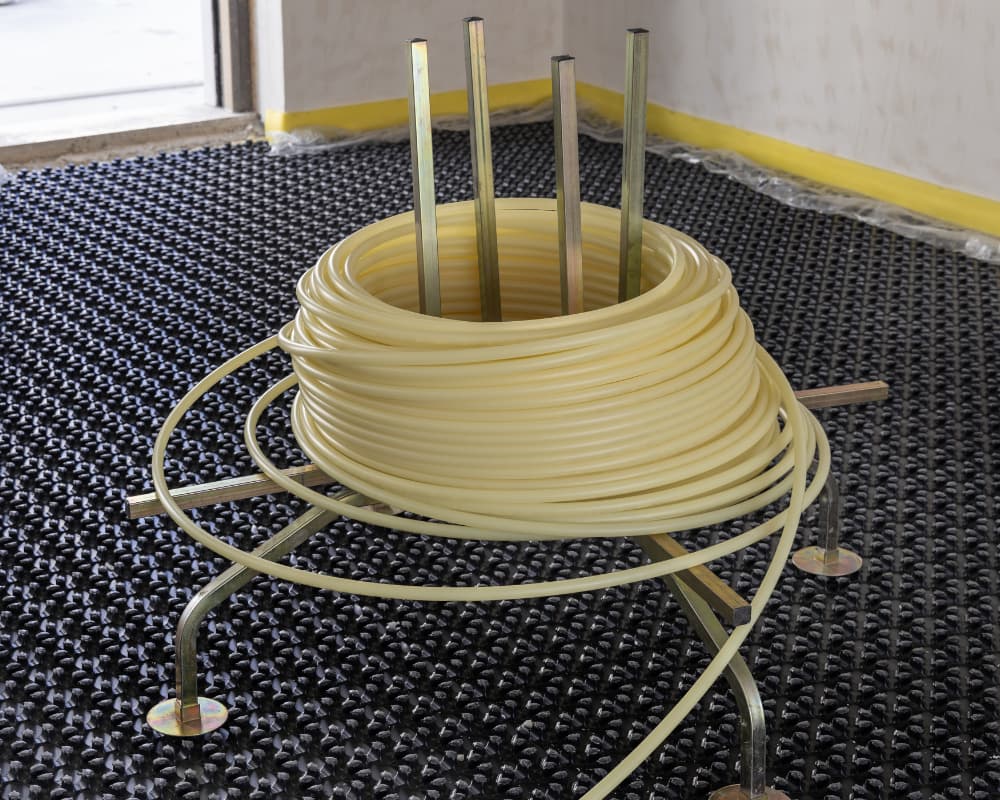
Modern electrical systems ranging from wires and cables to circuit breakers, conduits and safety equipment have rapidly replaced traditional electrical processes, forming the backbone of today’s advanced infrastructure. As governments invest heavily in urban planning, transportation and energy networks, demand for these systems is accelerating worldwide. At the center of this growth are wires and cables, which play a critical role in the transmission of electricity and data and have become indispensable for efficient power distribution.
Rising urbanization, population growth and increasing disposable incomes are driving large-scale expansion in residential, commercial and industrial construction. Each construction site brings specific electrical requirements, often governed by strict legal and technical standards, further boosting demand for compliant, high-quality cabling solutions. In particular, the building cabling segment—which serves housing, offices and mixed-use developments—has expanded alongside structural changes in the global housing market.
Infrastructure development linked to renewable energy, electrification, smart cities and digital connectivity has also intensified the need for advanced wire and cable solutions. Transportation systems, energy grids, data centers and communication networks all rely on increasingly sophisticated cabling technologies. According to Fortune Business Insights™, the global wires and cables market was valued at USD 208.89 billion in 2023 and is expected to grow to USD 357.34 billion by 2032, registering a compound annual growth rate (CAGR) of 6.23% between 2024 and 2032. The market is projected to reach USD 220.28 billion in 2024 alone.
Industry leaders are responding to this demand with new investments, technological innovation and strategic expansion. Italy-based Prysmian Group continues to strengthen its global footprint in power transmission, infrastructure and telecommunications cables, while France’s Nexans is positioning itself at the forefront of the energy transition with advanced cable technologies for power and data transmission. Japan’s Fujikura is expanding fiber optic manufacturing capacity to support next-generation access networks, and U.S.-based Belden is focusing on mission-critical solutions for smart buildings and industrial automation.
Asian and European manufacturers are also scaling up. Sumitomo Electric Industries is investing in subsea power cable production to support offshore renewable projects, while Denmark’s NKT is securing major contracts linked to Europe’s grid expansion and renewable energy integration. India-based Havells is expanding internationally, particularly in North America, while companies such as Ravicab Cables and Southwire are pursuing acquisitions to strengthen their positions in specialized and low-voltage cable segments.
Collectively, these developments underscore a market shaped by urban growth, sustainability goals and technological change. As countries modernize infrastructure and accelerate the shift toward clean energy and digitalization, the global wire and cable industry is set to remain a key enabler of economic development and long-term energy resilience.