Yorkshire-based Olicana Products has further expanded its vertically integrated manufacturing capabilities with continued investment in advanced CNC machinery, reinforcing its position as a high-volume supplier to the commercial seating sector and a growing range of medical, education, and bathroom product manufacturers.
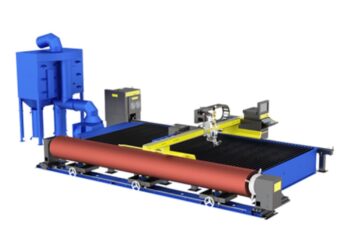
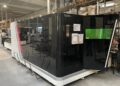
For many years, Olicana has specialized in CNC tube laser cutting and bending, supported by robotic welding and powder coating. Until recently, flat metal components were the only elements sourced externally, representing a relatively small portion of overall fabrications. That changed in April 2024, when the company installed an LS7 flat-bed fibre laser cutting system at its Ilkley facility, supplied by BLM Group UK, the British subsidiary of the Italy-based machine tool manufacturer.
The move to bring flat-sheet laser cutting in-house was initially driven by supply chain disruptions during the Covid-19 pandemic, when delays from subcontractors highlighted the risks of external dependency. Olicana first addressed the issue by acquiring a second-hand CO₂ flat-bed laser machine, successfully proving the viability of internal production. Building on that experience, management opted to invest in a new-generation fibre laser system for long-term use, ultimately selecting BLM from a shortlist of four suppliers.
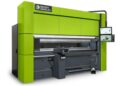
Olicana’s long-standing relationship with BLM played a key role in the decision. The company has operated BLM tube-bending equipment since 2001, beginning with an E-TURN 52 electric CNC tube bender capable of processing tubes up to 52 mm in diameter. At the time, it marked Olicana’s first move away from hydraulic machines, offering greater flexibility through features such as variable-radius bending and improved precision.
Over time, the benefits of all-electric tube bending have become increasingly evident. Compared with hydraulic systems, electric machines offer higher accuracy and improved environmental performance, eliminating the risks associated with hydraulic fluid leakage and thermal expansion during operation. More recent E-TURN models also incorporate advanced multi-axis control and a dual-head configuration that enables right- and left-hand bends to be completed within a single automated cycle.
This capability is particularly important for Olicana’s complex tubular fabrications. Without bi-directional bending in one cycle, many components would require separate tubes to be formed and welded together, significantly increasing production costs and post-weld finishing requirements, especially for visible product areas.
Following the success of the original E-TURN 52 installation, Olicana added two smaller-capacity E-TURN 32 machines in 2021 and 2023. All three machines are supported by BLM’s VGP3D off-line programming software, which allows bending sequences to be simulated in advance. This enables potential collisions or design constraints to be identified early, giving Olicana the opportunity to work with customers on design refinements before production begins.
Together, the addition of fibre laser profiling and continued investment in electric tube bending technology reflect Olicana’s broader strategy to strengthen supply chain resilience, enhance manufacturing efficiency, and deliver complex, high-quality fabrications through a fully integrated production model.