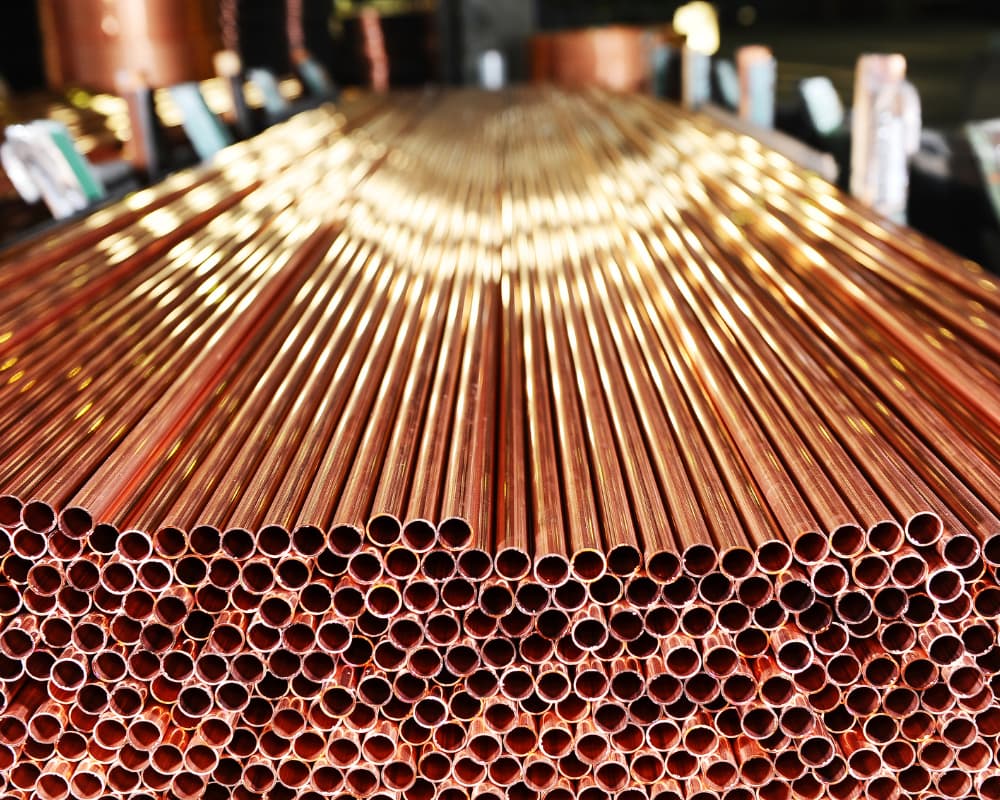
The Trump administration has unveiled plans to impose a 50% tariff on copper pipes, wiring, and selected semi-finished copper products, a move that surprised markets and triggered a sharp decline in U.S. copper prices. The announcement fell short of earlier expectations for sweeping restrictions across the entire copper supply chain, significantly altering market sentiment.
Contrary to initial signals from President Donald Trump earlier this summer, the new policy excludes key copper input materials such as ores, concentrates, cathodes, anodes, and scrap. As a result, the tariff will apply only to pipes, tubes, and other semi-finished copper products, as well as downstream goods in which copper is heavily used, including cables and electrical components. The measure is set to take effect this Friday, according to a proclamation released by the White House.
Markets reacted swiftly to the narrower scope of the tariff. U.S. copper prices on the Comex exchange fell by more than 17%, erasing a significant premium over London Metal Exchange benchmarks that had built up in recent weeks. That premium had been driven by expectations of broad-based tariffs and the diversion of shipments toward the U.S. in anticipation of higher domestic prices.
Analysts described the policy shift as a major reversal. Market participants rapidly repriced refined copper lower as the likelihood of tighter supply conditions diminished. The pullback suggests that fears of a severe disruption to U.S. copper imports have eased, at least for now.
The decision is expected to have mixed implications across the industry. While U.S. manufacturers that rely on refined copper inputs may benefit from lower prices and continued access to overseas supply, domestic copper miners and developers could face renewed pressure. Analysts note that companies such as Freeport-McMoRan, along with several U.S.-focused copper development projects, may be negatively affected by the limited scope of the tariff, as it does little to support domestic mining output.
In the executive order, the administration stated that Commerce Secretary Howard Lutnick had determined copper imports were entering the United States “in such quantities and under such circumstances as to threaten to impair the national security of the United States.” Despite this justification, the exclusion of primary copper materials means the policy offers limited relief to the U.S. mining sector, which has long sought permitting reform and regulatory support to expand production capacity.
By excluding concentrates, cathodes, and scrap, the tariff structure is also expected to benefit major copper-producing nations such as Chile and Peru, both of which are among the largest suppliers of copper to the United States. With core raw materials unaffected, exports from these countries are likely to continue flowing with minimal disruption.
Overall, the revised tariff marks a significant scaling back from earlier rhetoric, reshaping expectations across global copper markets and highlighting the delicate balance between protecting domestic manufacturing, managing inflationary pressures, and supporting strategic raw material supply chains.