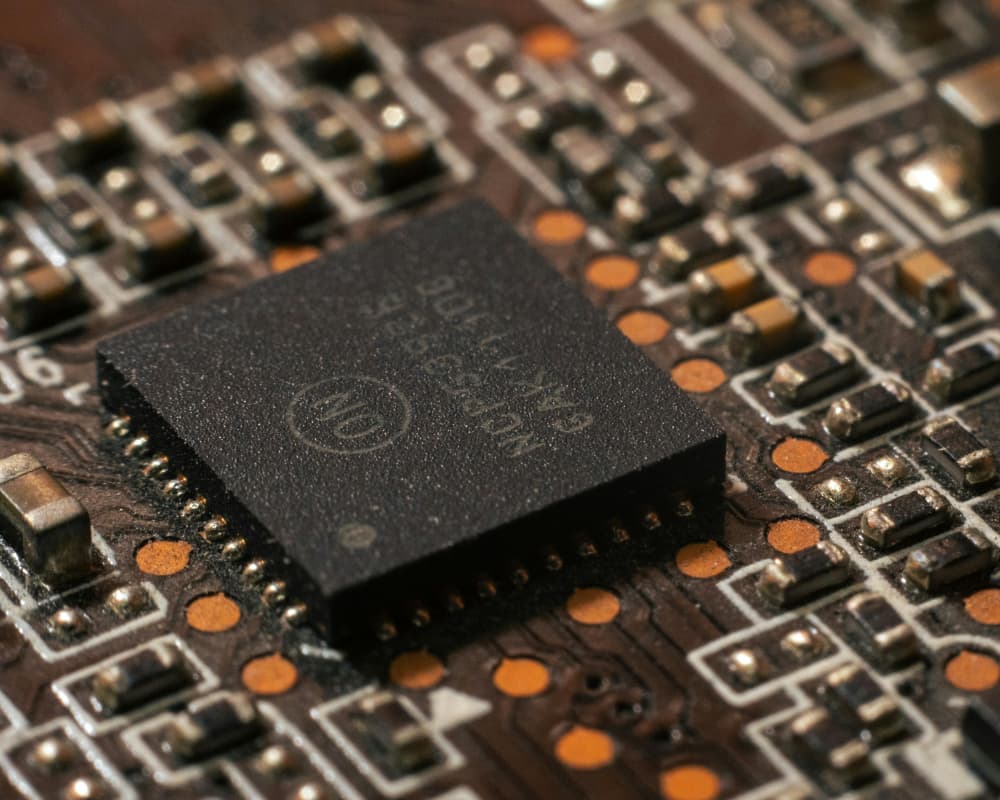
The United States plans to impose new tariffs on semiconductors imported from China starting June 23, 2027, according to a Federal Register filing, adding another layer to already strained trade relations between the world’s two largest economies.
Under the plan, the initial tariff rate will be set at 0% upon introduction but will be increased after an 18-month period. The final duty rate will be announced at least 30 days before it takes effect and will be applied on top of the existing 50% tariff currently imposed on Chinese semiconductors. That levy stems from a previous Section 301 investigation into forced technology transfer practices.
The new tariff framework is the result of a separate Section 301 probe conducted by the Office of the U.S. Trade Representative (USTR) into China’s policies and practices related to semiconductor production and trade. The investigation was launched last December under the Biden administration.
Section 301 investigations are a key trade enforcement tool that allow the U.S. government to determine whether a foreign country is engaging in unfair trade practices. Such probes can lead to the imposition of tariffs or other import restrictions, amendments to trade agreements, or alternative forms of relief, according to the Congressional Research Service.
In the Federal Register filing, the USTR said it opted to introduce new levies because China’s “targeting of the semiconductor industry for dominance is unreasonable and burdens or restricts U.S. commerce.” The agency argued that China exercises “extraordinary control” over the sector, harming foreign competitors and buyers, including those in the United States.
The filing pointed to China’s use of political guidance and mandatory directives imposed on both state-owned and private enterprises as a key factor distorting competition. According to the USTR, these measures create an uneven business environment that suppresses market-based competition and investment.
“China’s targeted dominance burdens or restricts U.S. commerce because it undercuts business opportunities for and investments in the U.S. semiconductor industry,” the filing said. It also warned that such policies pose economic security risks by creating supply dependencies in critical sectors such as defence and automotive manufacturing, both of which rely heavily on stable access to semiconductors.
Trade tensions between Washington and Beijing have remained elevated throughout much of 2025, building on more than a decade of disputes over tariffs, industrial policy and technology. Both the Trump and Biden administrations have imposed multiple rounds of tariffs and launched investigations into Chinese trade practices. Although the two countries reached a limited truce in October to prevent further escalation, the U.S. has maintained significant tariffs on a wide range of Chinese goods.
Beyond China-specific measures, the U.S. is also considering broader restrictions on semiconductor imports. Earlier this year, Washington launched a Section 232 investigation into semiconductor imports from all countries, examining whether such imports pose a national security risk. Similar probes in the past have resulted in sector-wide tariffs on products including steel and automotive components.