The rules of global trade are no longer just about cost and quality; a new compass is guiding international commerce: sustainability. The European Union’s ambitious EU Green Deal is the most significant manifestation of this new era. For Turkey’s machinery industry, a sector where over 50% of exports go to the EU, this isn’t merely a new regulation—it’s a critical turning point. Is the Green Deal a costly burden that will stifle growth, or is it a golden ticket to a more competitive and innovative future? This article moves beyond rhetoric to provide a concrete, data-driven roadmap for B2B professionals, analyzing the specific impacts, risks, and immense opportunities the EU Green Deal presents for Turkey’s machinery production.
Why It Matters: New Trade Rules and the Imperative for Transformation
The EU’s goal to become the world’s first climate-neutral continent by 2050 is not a distant vision; it’s a policy package that is already reshaping supply chains and industrial policy globally. The most direct and powerful tool of this deal is the Carbon Border Adjustment Mechanism (CBAM). CBAM is designed to prevent “carbon leakage”—the relocation of carbon-intensive production to countries with less stringent climate policies. While CBAM’s initial focus is on energy-intensive sectors like iron and steel, cement, and aluminum, its ripple effect will inevitably impact Turkey’s machinery production.
This makes adaptation a non-negotiable for Turkish manufacturers. Failing to align with the Green Deal and CBAM could lead to a loss of market share, brand reputation, and competitive advantage in a region that is a major trading partner. Conversely, embracing this transformation offers an opportunity to innovate, capture new markets, and position Turkey as a leader in sustainable manufacturing.
The EU Green Deal’s Core Pillars and Their Impact on Turkey’s Machinery Production
The EU Green Deal is a comprehensive framework, and its effects on Turkey’s machinery production are multi-faceted.
1. Carbon Border Adjustment Mechanism (CBAM)
CBAM is the most critical element for Turkish exporters. Although the machinery sector is not yet directly covered, the impact is significant due to its heavy reliance on CBAM-regulated inputs like iron and steel.
- Indirect Cost Impact: Turkish manufacturers of machines will face increased costs on their raw materials, which will have a direct effect on the final price of their products. A study by a Turkish think tank estimated that CBAM could bring a carbon bill of €1.1-1.8 billion to Turkish exporters in the EU market.
- Future Direct Impact: Experts believe it is only a matter of time before the machinery sector itself is included under CBAM’s scope. This underscores the urgency for manufacturers to start measuring and reducing their carbon footprint now.
- The Opportunity: By proactively decarbonizing production, Turkish firms can not only avoid future tariffs but also market their products as “low-carbon,” a powerful differentiator in the European market.
2. Circular Economy and Resource Efficiency
The Green Deal promotes a shift from a linear “take-make-dispose” model to a circular “produce-use-reuse” model. This requires a fundamental rethink of product design and manufacturing processes in Turkey’s machinery production.
- Sustainable Design: Machines must be designed for longevity, durability, and easy disassembly for recycling. Manufacturers need to prioritize modular designs and the use of recycled or bio-based materials.
- Resource Efficiency: Production processes must be optimized to minimize waste, water, and energy consumption. This includes investing in technologies for waste heat recovery and closed-loop water systems.
- Case Study: The Turkish automotive industry, a key customer for machinery manufacturers, has already shown success in this area, reducing greenhouse gas emissions per light vehicle by 31% over the last four years and achieving a 99% recovery rate for production waste. This pressure from end-users will drive similar changes in the machinery sector.
3. Energy Efficiency and Clean Energy Transition
The Green Deal’s focus on decarbonization means that machinery manufacturers must address their own energy consumption and the energy efficiency of their products.
- Renewable Energy in Production: Investing in renewable energy sources like solar panels for factory rooftops or purchasing green electricity is becoming a strategic move to reduce carbon emissions.
- Energy-Efficient Products: The market demand for machines that consume less energy is soaring. This is a direct result of rising energy prices and stricter regulations. Turkish manufacturers who can design and certify machines with high energy efficiency ratings will have a significant competitive advantage.
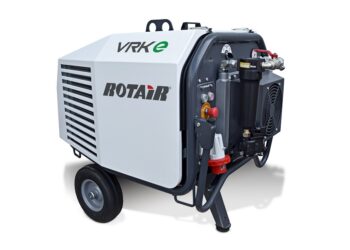
- Example: A Turkish manufacturer of industrial compressors gained a major foothold in the German market by showcasing their machines’ use of variable speed drives (VSD), which can reduce energy consumption by up to 30%. .
Actionable Tips for Manufacturers: Turning Threats into Opportunities
The EU Green Deal is a wake-up call, but it also presents a golden opportunity. Here is a clear roadmap for Turkish machinery manufacturers:
1. Measure and Manage Your Carbon Footprint
- Conduct an Audit: The first step is to accurately measure your company’s carbon footprint, including Scope 1, 2, and 3 emissions. This will provide a baseline for your decarbonization strategy.
- Set Clear Goals: Establish specific, measurable, and time-bound targets for reducing your emissions, aligning with international standards and Turkey’s own 2053 net-zero target.
2. Invest in Green and Digital Technologies
- Upgrade Your Equipment: Replace old, inefficient machinery with new, energy-efficient models. This investment will pay for itself in the long run through reduced operational costs.
- Integrate Digital Solutions: Adopt IoT sensors and data analytics to monitor and optimize your energy consumption and production processes. This is the “digital twin” of the green transition.
- Explore New Materials: Research and adopt recycled or low-carbon materials in your production to reduce your indirect emissions.
3. Seek Strategic Support and Certification
- Leverage Government Incentives: The Turkish government offers various grants and incentives for green and digital transformation projects. Partner with institutions like TÜBİTAK and KOSGEB to access these funds.
- Obtain Certifications: Ensure your products and processes are certified to international standards (e.g., ISO 14001, Eurovent for HVAC systems). These certifications are not just regulatory hurdles; they are powerful marketing tools.
- Collaborate with Partners: Join industry associations and platforms like the “Green Transformation of Turkish Industry” program to share best practices and collectively address the challenges.
Common Mistakes and How to Avoid Them
The transition to a green economy is complex, and many firms are making common mistakes.
- Ignoring the Problem: The most significant mistake is assuming the Green Deal won’t apply to your sector. The indirect and eventual direct impacts are unavoidable.
- A Superficial Approach: Simply putting “eco-friendly” on your brochure without making real changes to your production process is a mistake. The EU is focused on verifiable carbon accounting and a real reduction in emissions.
- Delaying Investments: While the initial cost of green technology can be high, the cost of inaction—losing market share, paying CBAM tariffs, and being left behind by competitors—is far greater.
Future Trends and Predictions for Turkey’s Machinery Production
The EU Green Deal is a catalyst for the future, and its long-term effects on Turkey’s machinery production will be profound.
- The Twin Transition: The simultaneous push for digitalization and decarbonization will become the central theme for the industry. Companies that excel at both will become market leaders.
- Nearshoring Advantage: As European companies prioritize resilient supply chains, Turkey’s strategic location and commitment to green standards will make it an even more attractive “nearshoring” partner.
- Service-Oriented Models: The focus will shift from selling a physical product to offering a comprehensive service. This includes maintenance, data analytics, and performance optimization—all of which are driven by smart, sustainable machinery.
A New Era of Leadership for Turkish Machinery Production
The EU Green Deal is not just a regulatory challenge for Turkey’s machinery production; it’s a strategic opportunity to redefine its role in the global industrial landscape. By embracing this green and digital transformation, investing in innovation, and aligning with global standards, Turkish manufacturers can not only secure their place in key markets but also emerge as leaders in the new, sustainable global economy. The future is a race toward innovation and sustainability, and Turkey is poised to be a front-runner.