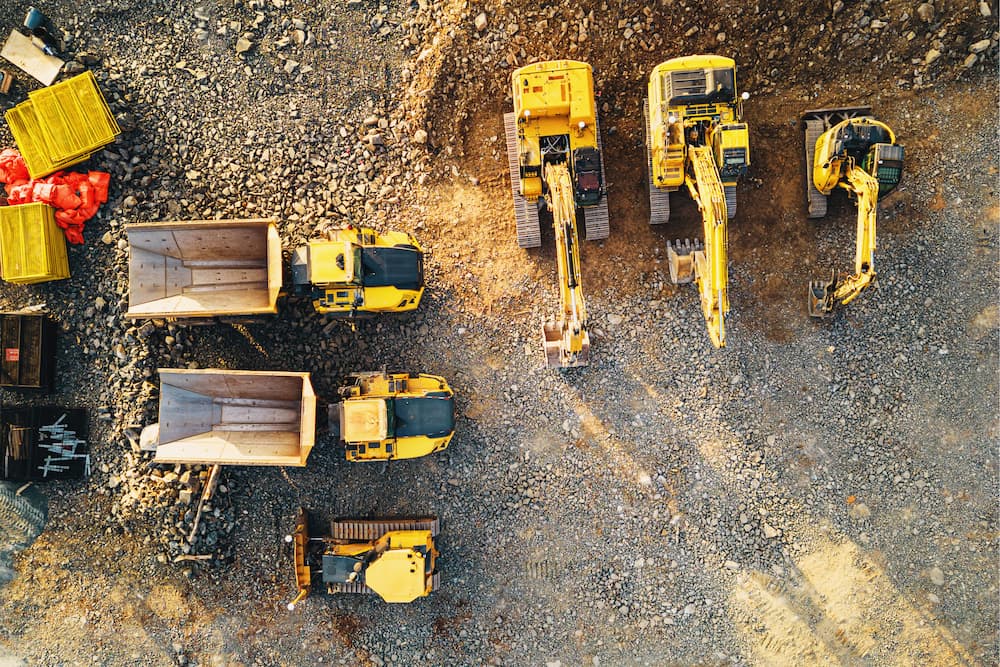
The global construction machinery market has undergone a marked transformation since 2020, with Chinese-made equipment steadily increasing its presence worldwide. After four consecutive years of rapid export growth since 2021, attention in international markets is now turning to whether this momentum can be sustained in the years ahead.
Industry forecasts suggest that China’s construction machinery sector will continue its global expansion in 2026, supported by stable economic fundamentals and resilient foreign trade performance. This outlook is reinforced by data from the General Administration of Customs, which shows that from January to October 2025, China’s cumulative construction machinery import and export volume reached $50.7 billion, up 11.5% year on year. Exports accounted for the bulk of this figure at $48.5 billion, representing a 12% annual increase and indicating that Chinese products remain highly competitive despite a high comparison base.
Leading manufacturers such as XCMG, Sany, and Zoomlion have seen overseas markets evolve from supplementary revenue streams into core pillars of profitability. Their growth is increasingly driven by a highly integrated domestic supply chain that offers advantages in cost control, delivery speed, and customization. As self-sufficiency in key components improves, Chinese manufacturers are moving beyond low-price competition and accelerating their entry into mid- to high-end global markets with stronger overall performance and reliability.
On the demand side, infrastructure investment continues to support exports across both traditional and emerging markets. Southeast Asia and Russia have maintained stable demand linked to mining and infrastructure development, while Latin America, India, and Africa are showing rising interest in cost-effective machinery paired with reliable after-sales service. Chinese-made cranes and lifting solutions, in particular, are becoming common at ports and logistics hubs worldwide due to their strong performance and competitive lifecycle costs.
Looking ahead, environmental performance is emerging as a decisive factor in international competitiveness. As global decarbonization targets tighten, electrification and low-emission machinery are increasingly required in international tenders. Benefiting from advances in batteries, electric drivetrains, and electronic control systems, Chinese manufacturers are rapidly expanding their portfolios of electric excavators, zero-emission cranes, and smart, remotely controlled equipment. These technologies not only lower total ownership costs for customers but also help meet stricter environmental regulations.
Supported by domestic policies promoting green development, smart manufacturing, and equipment renewal, China is converting its growing “green production capacity” into a new source of global competitive strength. As a result, Chinese construction machinery is transitioning from a value-driven alternative to a technology- and sustainability-focused choice in the international market.