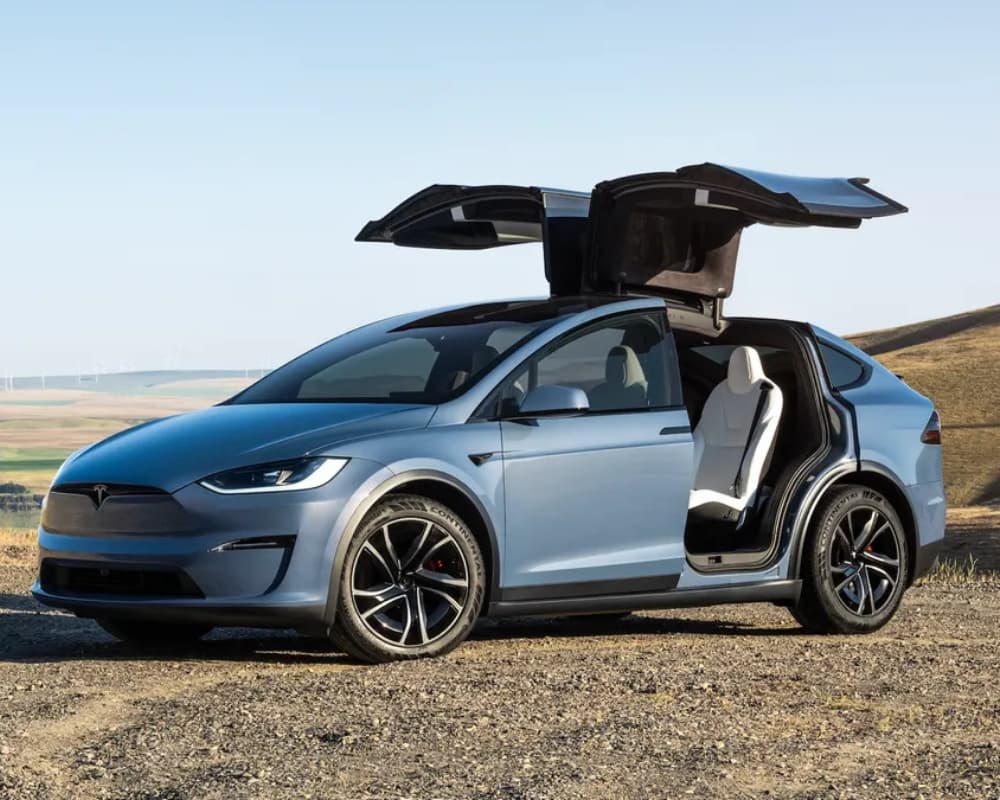
Tesla will discontinue production of its Model S sedan and Model X SUV in the second quarter of this year, marking the end of two of its longest-running electric vehicle programs. CEO Elon Musk announced the decision during the company’s latest earnings call, confirming that the production space at Tesla’s Fremont, California factory will be repurposed for large-scale manufacturing of its humanoid Optimus robots.
The Model S, first delivered in 2012, and the Model X, launched in 2015, have played a foundational role in Tesla’s growth. However, the two models accounted for only around 3% of the company’s global production of 1.65 million vehicles in 2025. Combined annual output of the Model S, Model X and low-volume Cybertruck totaled roughly 54,000 units last year.
Tesla confirmed it will continue servicing existing Model S and Model X vehicles, ensuring long-term support for current owners even after production ends.
The Fremont facility will now undergo retooling to support mass production of Tesla’s Optimus humanoid robots. The company’s long-term objective is to manufacture up to one million Optimus units annually within the current Model S and Model X production footprint.
Beyond robotics, Tesla is accelerating its transformation toward autonomous mobility and artificial intelligence-driven technologies. The company plans to ramp up production of its fully autonomous Cybercab robotaxi, which is scheduled to enter production in April. Designed without a steering wheel or pedals, the two-seater Cybercab is intended to optimize cost-per-mile efficiency and operate entirely through self-driving systems. Tesla expects Cybercab production volumes to eventually surpass those of its existing vehicle lineup.
In parallel, Tesla’s energy storage division delivered record gross revenue of $12.8 billion in 2025, representing a 26.6% year-over-year increase. Driven by strong demand for stationary energy storage systems, particularly for AI data centers, the company plans to invest billions of dollars into this segment in 2026.
Capital expenditure for the year is forecast to exceed $20 billion. This includes funding for a new “TerraFab” chip facility aimed at producing advanced AI chips domestically, integrating logic, memory and packaging capabilities. The move is designed to reduce reliance on overseas suppliers and mitigate geopolitical risks. Additional investments will support scaling of Optimus robot production and expansion of autonomous vehicle programs.
Tesla also signaled a strategic shift for the Cybertruck, positioning it for autonomous commercial use cases such as localized cargo delivery and last-mile logistics.
If executed successfully, Tesla’s roadmap would mark a decisive pivot away from its traditional automotive focus toward a broader AI and robotics-driven business model. Company leadership maintains confidence that autonomy, robotics and AI infrastructure will define the next phase of Tesla’s growth trajectory.