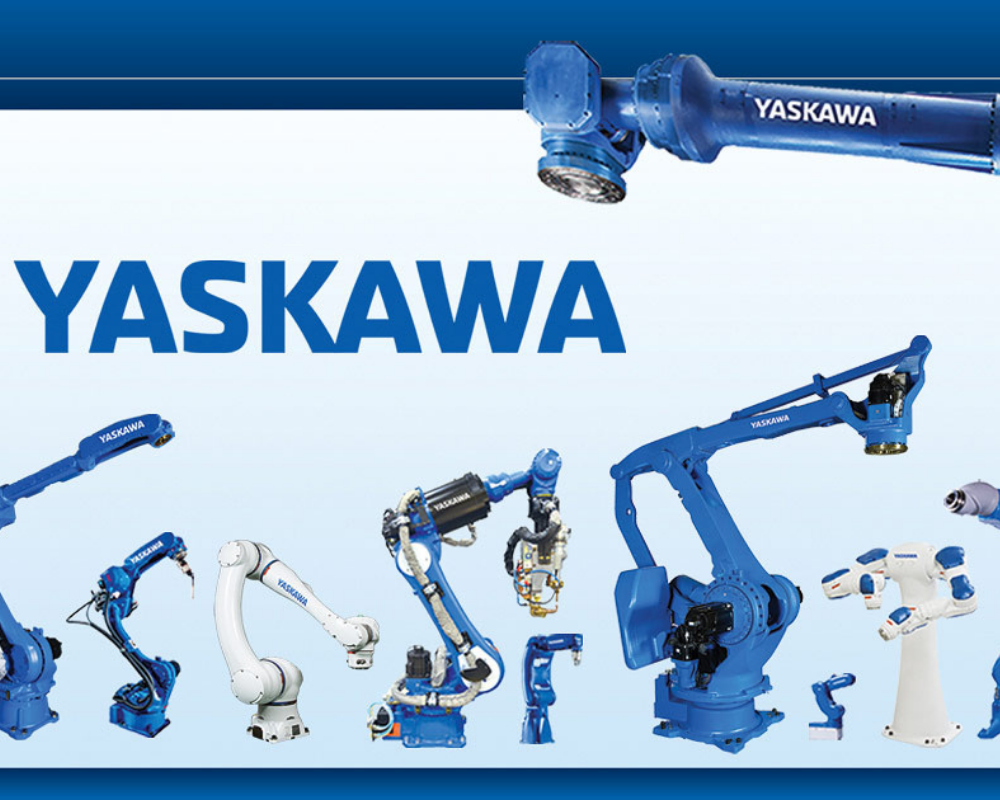
In the long and storied history of industrial automation, few companies have shaped the trajectory of motion control as profoundly as Yaskawa Electric Corporation. Since its founding in 1915, this Japanese giant has been a pioneer in servo drives and inverter technology. However, with the launch of the MOTOMAN NEXT platform, Yaskawa has officially transcended the boundaries of traditional “Teach and Playback” robotics, ushering in the era of Autonomous Adaptivity.
Today, Yaskawa Motoman is no longer just building machines that follow a fixed path; they are building intelligent systems that can perceive, reason, and react to their environment in real-time. By integrating Artificial Intelligence (AI) directly into the robot’s “nervous system,” Yaskawa is enabling automation in unstructured environments that were once thought to be the exclusive domain of human workers.
MOTOMAN NEXT: The Convergence of OT and IT
The most significant leap in Yaskawa’s recent history is the MOTOMAN NEXT platform. Traditionally, industrial robots operate on Operational Technology (OT)—rigid, signal-based control. MOTOMAN NEXT bridges this with Information Technology (IT), creating a unified architecture that handles both motion control and high-level AI data processing.
The Brain: NVIDIA Jetson Orin Integration
Unlike conventional robots that require an external PC to process AI algorithms, the MOTOMAN NEXT series (such as the NEX4, NEX7, and NEX35) utilizes the YNX1000 controller. This controller is powered by the NVIDIA Jetson Orin autonomous control unit, allowing the robot to:
- Plan Paths Autonomously: The robot detects obstacles and plans a collision-free trajectory on the fly without manual programming.
- Process 3D Vision: Real-time 6D pose estimation allows the robot to recognize and manipulate randomly placed objects with human-like dexterity.
- Adaptive Decision Making: If a workpiece is slightly out of position or a new variant enters the line, the AI adjusts the motion parameters instantly.

Direct Teach and The “Smart Pendant” Philosophy
Yaskawa has always been a leader in making robots accessible, but their Direct Teach and Hand-Guided Teaching technologies have reached new heights with the HC-series (Collaborative) and GP-series (Industrial) robots.
Hand-Guided “Lead-Through” Teaching
For small-to-medium enterprises (SMEs) that lack specialized robotic engineers, Yaskawa’s Direct Teach collar is a revolution.
- Physical Interaction: An operator can physically grab the robot arm and move it through the desired points of a weld or a pick-and-place sequence.
- One-Touch Recording: Buttons on the robot’s wrist allow the user to record points and engage grippers without ever touching a keypad.
- Automatic Code Generation: The background software converts these physical movements into INFORM (Yaskawa’s native language) code automatically.
The ArcWorld Heritage: Dominating the Welding Sector
While AI is the future, Arc Welding is Yaskawa’s core legacy. With over 600,000 robots installed worldwide, Yaskawa’s AR-series robots are considered the industry standard for thermal assembly.
- ArcWorld® Workcells: These are pre-engineered, “turnkey” welding cells. They include the robot, the positioner, the power source (often integrated with brands like Miller or Fronius), and the safety enclosure.
- Weld4Me: This specialized solution pairs an HC10DTP cobot with the Welding Wizard software, allowing manual welders to automate small-batch production by simply “showing” the robot where to weld.
- High-Inertia Servo Drives: Yaskawa’s proprietary Sigma-7 and Sigma-X servo motors provide the industry’s highest torque-to-weight ratio, ensuring that an AR2010 robot can perform ultra-fast “air-cuts” between welds, maximizing throughput.
Collaborative Excellence: The HC and NHC Series
The line between industrial and collaborative robots (cobots) is blurring. Yaskawa’s HC10 and HC30 models are designed for “Human-Robot Collaboration” (HRC) without sacrificing industrial performance.
- Power and Force Limiting (PFL): Specialized sensors in every joint detect human contact instantly, bringing the robot to a safe stop.
- NHC Series (Next Generation): Built on the MOTOMAN NEXT platform, these new cobots can perceive human gestures and intent, adjusting their speed and path to work more harmoniously alongside people in logistics and assembly.
Software Ecosystem: Digital Twins and Offline Programming
Yaskawa’s software suite ensures that the “Virtual” and “Real” worlds are perfectly synchronized.
- MotoSim® EG-VRC: This is a high-precision digital twin environment. It allows engineers to simulate an entire robotic cell, test AI scenarios, and validate collision-free paths before a single piece of hardware is installed.
- YNX Robot Simulator: Specifically for the MOTOMAN NEXT platform, this simulator supports ROS 2 and Docker environments, making it a favorite for researchers and high-tech integrators.
- Pallet Builder™: A no-code software tool for the Smart Pendant that makes complex palletizing tasks as simple as filling out a digital form.
Strategic Advantages: Why Choose Yaskawa Motoman?
For a production manager, a Yaskawa system is a long-term investment in uptime and adaptability.
| Feature | Yaskawa Motoman Solution | Traditional Robotic Brands |
| Intelligence | Integrated AI via NVIDIA Jetson Orin. | Requires external high-spec PCs. |
| User Interface | Smart Pendant with 3D Jogging. | Complex, text-heavy interfaces. |
| Adaptivity | Autonomous path planning (MOTOMAN NEXT). | Fixed, pre-programmed paths. |
| Durability | Patented High-Inertia Sigma Servos. | Standard off-the-shelf motors. |
| Support | “Lifetime Support” Commitment. | Support often ends with model EOL. |
Sector-Specific Applications
Yaskawa’s AI-driven adaptivity is opening doors in sectors that were previously impossible to automate:
- Logistics & Warehousing: Sorting irregular parcels and unstructured flows using the NEX-series robots and 3D vision.
- Food & Beverage: Using “Food Grade” IP67-rated robots for picking, packing, and even harvesting delicate agricultural products.
- Healthcare & Labs: Precise handling of clinical samples and automated pharmacy dispensing using the SDA-series (Dual-Arm) robots.
- Metal Fabrication: Combining high-tonnage SP-series spot welding robots with AI to compensate for plate distortion in real-time.
Sustainability and Energy Efficiency
Yaskawa is a world leader in Energy-Saving Inverter Technology. Their robots are designed to be “Lean and Green”:
- Regenerative Braking: Energy captured during the deceleration of the robot’s axes is fed back into the factory’s power grid.
- Slim-Arm Designs: By reducing the mass of the robot arm (without sacrificing rigidity), Yaskawa reduces the amount of torque and thus electricity required for every movement.
- Life Cycle Management: Yaskawa’s commitment to “Lifetime Support” ensures that robots stay in production for decades, drastically reducing the carbon footprint associated with manufacturing new machinery.
The Future: Generative AI and Humanoid Interaction
Looking toward 2027 and beyond, Yaskawa is experimenting with Large Language Models (LLMs) and voice-command interactions. Imagine a welder saying, “Robot, clean the slag and move to the next joint,” and the robot autonomously identifying the task and executing it. This is the goal of the MOTOMAN NEXT ecosystem—turning the robot from a tool into a conscious, productive partner.
Redefining What’s Possible
Yaskawa Motoman has successfully moved from the era of “Mechanical Automation” to the era of “Cognitive Automation.” By putting AI at the core of their hardware with the MOTOMAN NEXT platform and making the “teaching” process as simple as a human hand-shake with Direct Teach, they have lowered the barrier to entry for complex robotics.
For the manufacturer who needs to survive in a world of labor shortages and high-mix production, Yaskawa provides the ultimate competitive edge. They aren’t just building robots; they are building the autonomous infrastructure of the future.
Discover the next generation of adaptive robotics at www.motoman.com