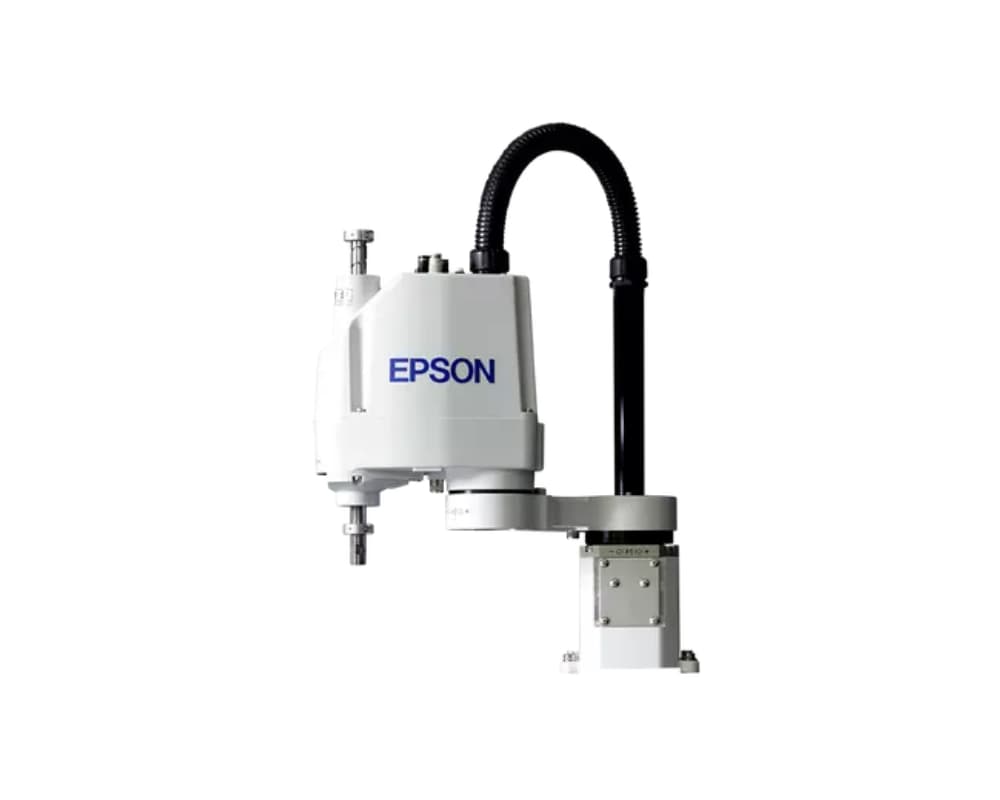
In the world of high-speed industrial automation, where every millisecond and every micron counts, one name stands above all for small-part assembly: Epson Robots. While other giants focus on massive automotive welding arms, Epson—a division of the Seiko Epson Corporation—has perfected the “Art of the Miniaturized.” Leveraging its rich heritage in watchmaking (Seiko) and precision mechatronics, Epson produced the first SCARA robot for its own internal watch assembly in the early 1980s.
Today, Epson is the world’s #1 SCARA robot manufacturer, offering an unparalleled range of 4-axis and 6-axis solutions. From the assembly of the latest smartphones and medical devices to the high-speed packaging of pharmaceuticals, Epson represents the definitive choice for manufacturers who demand Repeatability, Speed, and Compact Intelligence.
The Epson Heritage: From Watchmaking to Micro-Precision
Epson’s DNA is fundamentally different from heavy industrial robot brands. Their expertise is rooted in the “Sho Sho Sei” (Efficient, Compact, and Precise) philosophy.
Why Epson is the Global Standard for Precision Assembly:
- The SCARA Pioneer: Epson has held the top market share for SCARA (Selective Compliance Articulated Robot Arm) robots for over a decade, with over 100,000 units installed globally.
- Proprietary Quartz Sensors: Using Seiko Epson’s world-leading quartz technology, their robots feature QMEMS-based vibration control, allowing for extreme speeds without compromising stability.
- Vertical Integration: Epson designs and manufactures its own motors, controllers, and sensors, ensuring that every component of the robotic cell works in perfect harmony.
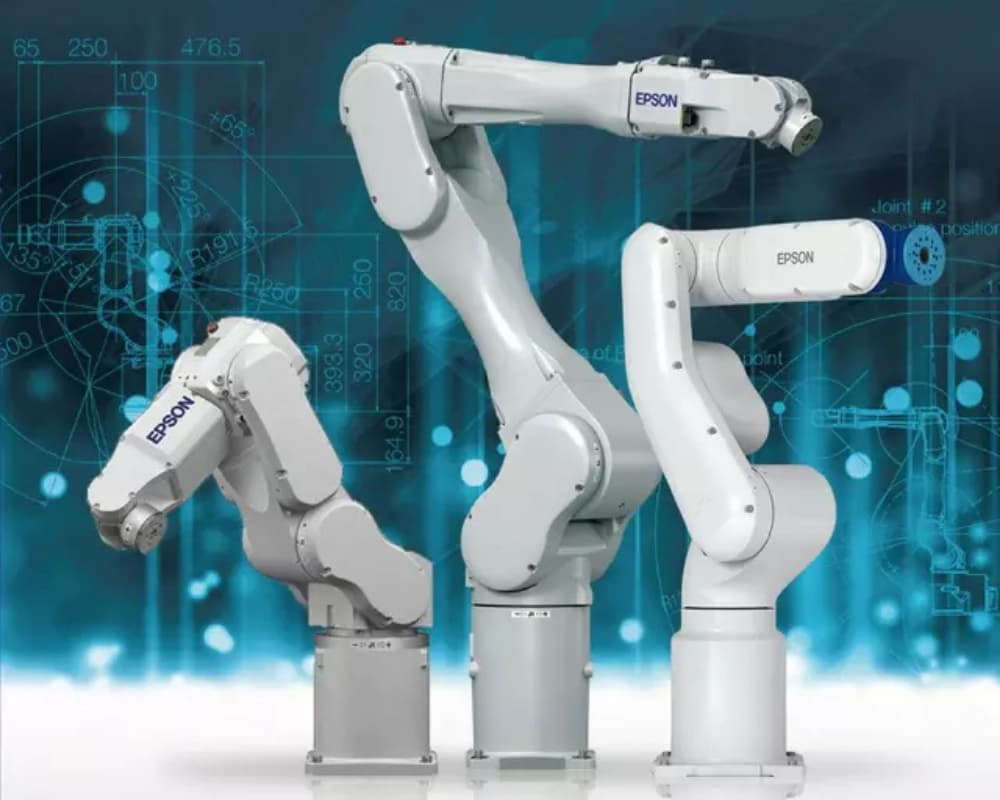
SCARA Excellence: The G, LS, and T Series
Epson’s SCARA lineup is the most diverse in the industry, categorized by the level of performance and budget required.
The G-Series: The High-Performance Flagship
The G-Series is designed for the most demanding assembly tasks.
- Ultra-High Repeatability: With tolerances as tight as +/- 0.005mm, the G-series can place components that are barely visible to the human eye.
- Maximized Rigidity: The high-torque design allows for high speeds even with offset loads, making it ideal for multi-tool applications.
The T-Series: The “All-in-One” Value Champion
The T-Series redefined the entry-level market. By integrating the controller into the base of the robot, Epson created a “Plug-and-Play” system.
- Simplified Cabling: No external controller means less wiring, easier installation, and a significantly lower total cost of ownership.
- Battery-less Encoders: Reduces maintenance costs and downtime, as there are no backup batteries to replace in the motors.
6-Axis Precision: The C and N Series
While SCARA is their specialty, Epson’s 6-axis (Articulated) robots bring Watchmaker-level precision to complex 3D movements.
- C-Series: These “Slim-Line” robots are designed for tight spaces. They are remarkably fast and can reach into small cavities, making them a favorite for machine tending and medical part assembly.
- N-Series (Folding Arm): A revolutionary design where the arm can “fold” under itself. This allows the robot to work in a footprint similar to a human worker, requiring 40% less space than traditional 6-axis arms.
Integrated Intelligence: Vision and Force Sensing
In 2026, an Epson robot is more than an arm; it is a “Sensing System.”
Epson Vision Guide
Unlike third-party vision integrations that suffer from communication lag, Epson Vision Guide is built directly into the software environment. It allows the robot to “see” randomly oriented parts, identify defects, and perform high-precision guidance in real-time.
Force Sensing (S250 Series)
Epson’s high-precision force sensors allow robots to “feel” as little as 0.1 Newtons of force.
- Tactile Assembly: Essential for delicate tasks like “Snap-Fit” assembly or inserting tiny pins into connectors where excess force would break the part.
- Automated Polishing: The robot can maintain a constant pressure against a surface, regardless of height variations, ensuring a perfect finish every time.
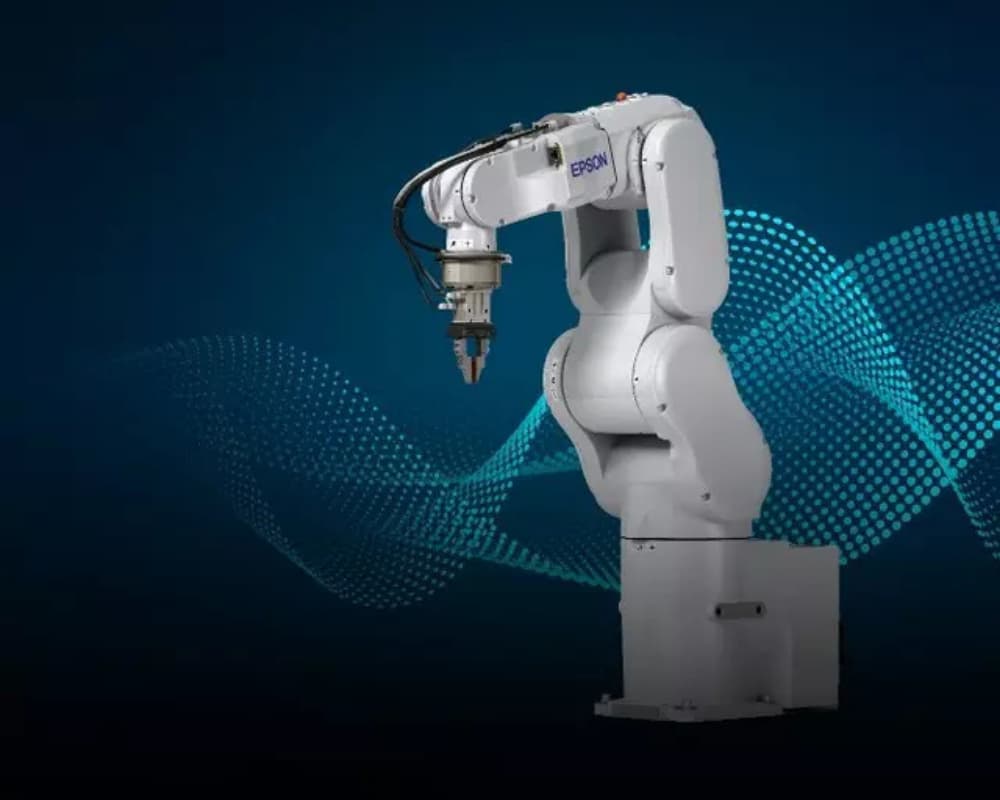
Software: Epson RC+ – The Industry’s Most Intuitive Environment
Epson’s RC+ 7.0/8.0 software is world-renowned for its ease of use and powerful simulation capabilities.
- SPEL+ Language: A powerful yet easy-to-learn programming language designed specifically for high-speed motion control.
- Epson RC+ Simulator: Engineers can build an entire factory floor in 3D, testing for collisions and cycle times with 99% accuracy before the physical robot arrives.
- One Environment: Vision, Force Sensing, and Motion Control are all programmed in a single, unified interface.
Strategic Advantages: Why Choose Epson?
For a production manager in the electronics or medical sector, Epson represents the lowest Cost-per-Million-Cycles.
| Feature | Epson Robotic Solution | Standard Industrial Brands |
| Repeatability | Industry-leading (+/- 0.005mm). | Usually +/- 0.02mm to 0.05mm. |
| Footprint | Ultra-Compact (Integrated Controllers). | Large external control cabinets. |
| Vibration Control | Patented QMEMS Technology. | Software-only dampening. |
| Programming | Unified RC+ Environment. | Multiple disconnected software tools. |
| Maintenance | Low (Battery-less encoders). | Frequent battery/belt changes. |
Sector-Specific Applications
Epson technology is the “Heart” of the world’s most advanced high-tech assembly lines:
- Consumer Electronics: Assembly of smartphones, tablets, and wearables where components are microscopic.
- Medical Devices: High-speed packaging of syringes, assembly of hearing aids, and clean-room processing of surgical tools.
- Automotive (EV): High-speed assembly of battery cells and electronic control units (ECUs).
- Food & Pharma: Precision “Pick and Place” and high-speed sorting of pills and sensitive food products.
Sustainability: The “Sho Sho Sei” Green Logic
Epson is a leader in Eco-Conscious Automation:
- Energy Efficiency: Epson robots are significantly lighter than heavy industrial arms, requiring far less electricity to accelerate and move.
- Compact Factories: Their “Space-Saving” designs allow for smaller factory footprints, reducing the heating, lighting, and cooling energy costs of the plant.
- Circular Economy: Epson provides official “Factory Refurbished” programs, extending the lifecycle of their precision equipment by another 10-15 years.
Global Support and The Epson Training Academy
Epson operates with a “Global Strength, Local Service” philosophy.
- Epson Training Centers: Located across Japan, the USA, and Europe, providing certified training for operators on everything from “Vision Calibration” to “Force Control Optimization.”
- Rapid Parts Delivery: With a global logistics network, Epson ensures that original parts like belts and motors are available within 24 hours to minimize downtime.
- Consultative Engineering: Epson provides “Cycle Time Analysis” services, where they optimize a customer’s program to shave off precious milliseconds of production time.
AI-Vision and Autonomous Micro-Assembly
Looking toward 2027, Epson is integrating Deep Learning AI into its Vision Guide system. This will allow robots to “learn” how to handle flexible parts (like wires or fabrics) and recognize complex surface defects that were previously impossible to detect. This move toward “Cognitive Assembly” will redefine the limits of what a robot can build.
The King of the Millimeter
Epson Robots has successfully proven that Precision is more powerful than Size. By mastering the world of SCARA and compact 6-axis technology, they have provided the world’s high-tech manufacturers with a tool that matches the sophistication of the products they build.
For the company that demands sub-micron repeatability, high-speed throughput, and a space-saving digital ecosystem, Epson is the only choice. They don’t just move arms; they provide the precision that allows the modern world to be smaller, faster, and better.
Master the precision of your line with Epson at automation.epson.com