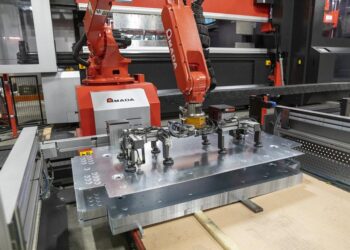
Industrial robots are evolving from classic automation systems into “intelligent business partners” thanks to artificial intelligence and advanced software infrastructures. According to an analysis in Plastics Today, the manufacturing world is entering a new era called “Automation 2.0,” where robots are transforming from simply programmed machines into systems that can learn, make decisions, and work alongside humans.
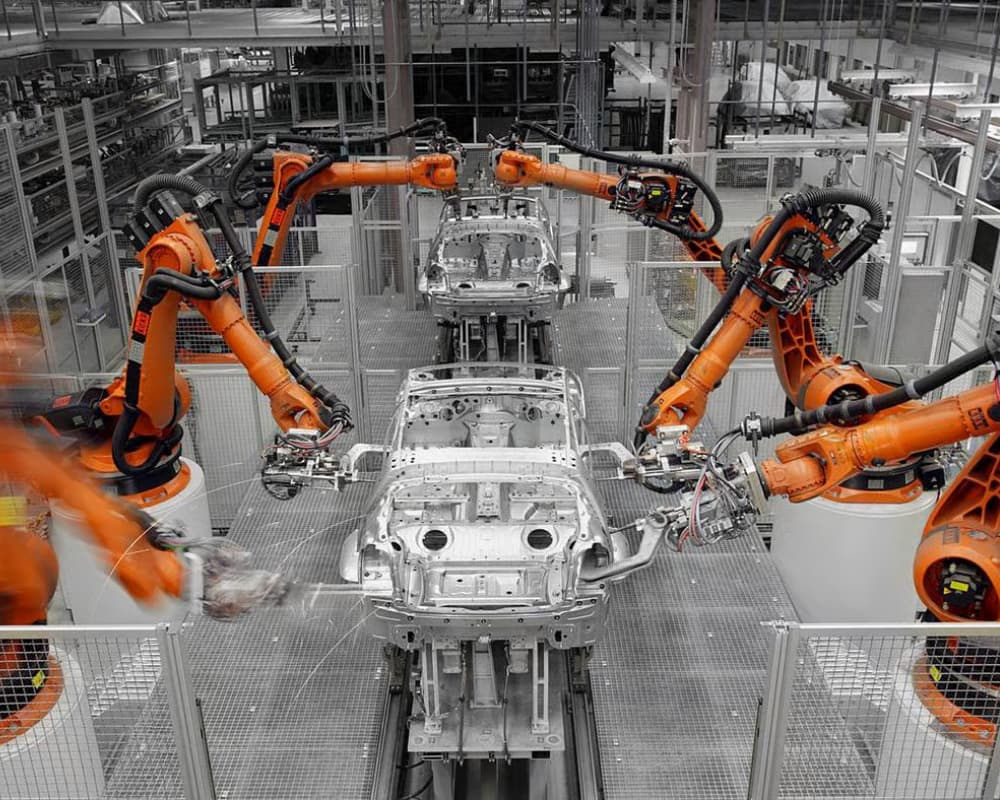
At the heart of this transformation are AI-powered “physical AI” and intent-based systems. New platforms developed by companies like NVIDIA and KUKA, in particular, are enhancing robots’ ability to not only analyze data but also perceive, decide, and take action in the physical world. This makes production processes more flexible, faster, and autonomous.
This new generation of automation doesn’t completely eliminate traditional rule-based systems; rather, it strengthens them with artificial intelligence, creating a hybrid structure. Experts believe that while Automation 1.0 still forms the basis of reliability in production, Automation 2.0 adds flexibility and adaptability, providing companies with a competitive advantage.
These developments are reshaping not only production lines but also many areas from supply chains to logistics. With the widespread adoption of smart robots, factories are becoming more connected and data-driven, and human-robot collaboration is becoming central to modern manufacturing. Experts emphasize that this transformation will lead to radical changes in terms of efficiency, cost, and innovation in industry in the coming years.