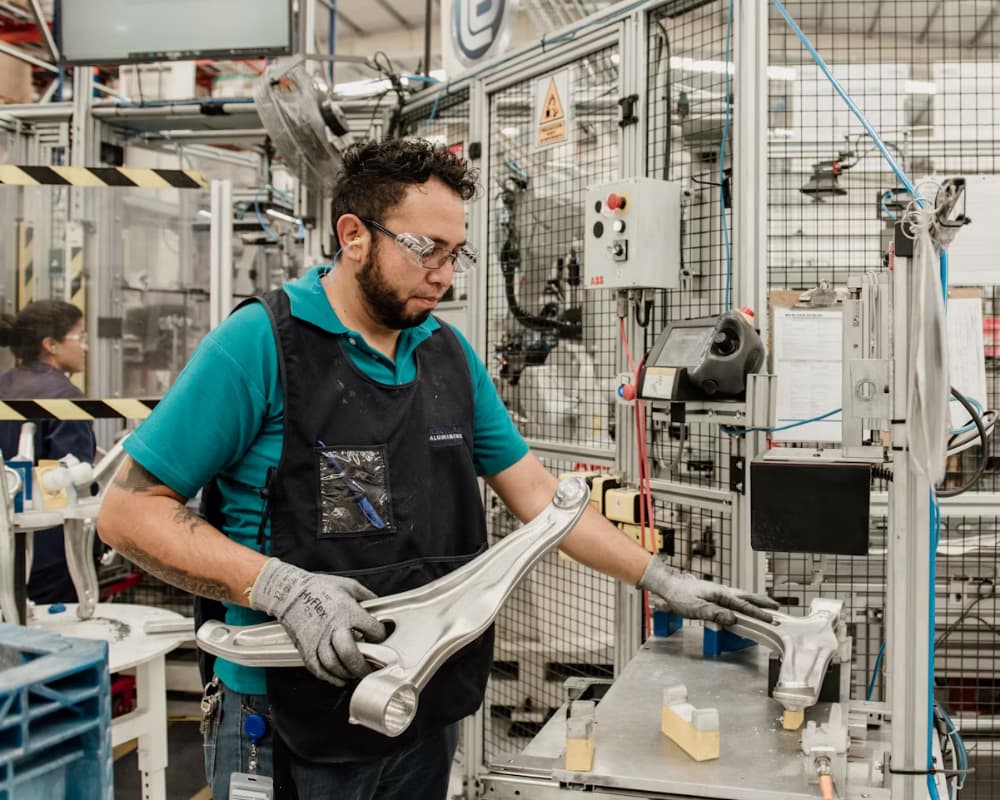
Extrutec has completed a major electrification project at the production facility of Neuman Aluminium in Marktl, Austria, marking a significant step toward decarbonising the plant’s operations.
The project included the conversion of two log furnaces from gas to electric power, along with the replacement of ageing furnace systems. As part of the upgrade, waste heat generated in the foundry is now reused for preheating processes, further improving overall energy efficiency. The electricity required for the new systems is sourced entirely from renewable energy.
As a result of the transition, the facility has reduced its Scope 1 CO₂ emissions by approximately 94%. Across the entire heat treatment process, annual CO₂ savings are estimated at around 311 tonnes, underlining the environmental impact of the investment.
Beyond emissions reduction, the new furnaces deliver notable technical enhancements. Components are heated more rapidly and uniformly thanks to a horizontal airflow system. Product quality has also improved, with visible stains and water residues significantly reduced through the extraction of residual moisture immediately after quenching at the beginning of the heat treatment cycle.
The furnaces enable precise adjustment of process parameters for each individual component, achieving temperature uniformity within ±2°C. This ensures consistent mechanical properties across production batches. Operational efficiency has also been strengthened, with reduced transport and handling costs achieved through the use of lightweight charging racks and direct transfer to heat treatment furnaces following solution annealing.
Thomas Eutebach, Managing Director of Neuman Aluminium Strangpresswerk GmbH, emphasised that the investment reflects the company’s long-term sustainability strategy despite ongoing economic challenges. He highlighted the importance of advancing decarbonisation efforts and reducing reliance on fossil fuels, particularly given the company’s regional roots and responsibility toward the environment and future generations.
The electrification project received financial support from the European Union, Austria’s Climate and Energy Fund, and the environmental funding programme of the Federal Ministry for Climate Action, Environment, Energy, Mobility, Innovation and Technology (BMK).