Collaborative robots, or cobots, are essential tools for small factory automation, offering a flexible, safe, and cost-effective entry point for Small and Medium-sized Enterprises (SMEs) seeking to adopt smart manufacturing practices. They are designed to work directly alongside humans, enhancing productivity and allowing manufacturers to remain agile in high-mix, low-volume production environments.
What Are Collaborative Robots?
Collaborative robots cobots are a new generation of industrial robotics explicitly designed to share a workspace with human workers without the need for large safety cages. Unlike traditional, high-speed industrial robots, cobots are engineered with inherent safety features that enable them to operate in close proximity to people. Their primary function is to augment the human workforce, taking over monotonous, ergonomically challenging, or dangerous tasks, thereby freeing human workers to focus on activities that require complex problem-solving, creativity, or nuanced manual dexterity.
Differences Between Cobots and Traditional Robots
The distinctions between cobots and traditional robots are rooted in design, application, and safety philosophy.
| Feature | Collaborative Robots (Cobots) | Traditional Industrial Robots |
| Safety | Built-in; use force-torque sensors, speed limits, and rounded edges. Stop on contact. | External; require large safety fencing, light curtains, and restricted access zones. |
| Speed/Payload | Lower speed and payload (typically under 20 kg). | High speed and very high payload (hundreds of kilograms). |
| Programming | Intuitive; often uses a graphical user interface or hand guiding (lead-through teaching). | Complex; requires specialized programming language expertise. |
| Deployment | Flexible, lightweight, and easily moved to different workstations. | Fixed, heavy, and permanently mounted for long production runs. |
| Cost | Lower initial capital and implementation costs (no fencing required). | Higher initial cost due to robot, infrastructure, and safety equipment. |
The emphasis on human-robot collaboration makes cobots ideal for flexible environments where constant human interaction is necessary.
Benefits for Small and Medium Factories
Cobots are uniquely suited to address the major hurdles faced by SMEs: limited capital, scarce floor space, and the need for high product variety.
Flexible Automation Solutions
One of the main competitive advantages of cobots for SMEs is the provision of flexible automation solutions. Small factories often deal with smaller batch sizes and more frequent product changeovers, a scenario where fixed, expensive automation fails. Cobots, being lightweight and easy to reprogram, can be redeployed quickly from one task—like machine tending—to another—like packaging—in a matter of hours. This agility allows SMEs to rapidly adapt to fluctuating market demands and trends like mass customization without the huge capital investment or downtime required to retool a traditional line.
Cost and Efficiency Advantages
Adopting cobots offers compelling cost and efficiency advantages. Their initial purchase and integration costs are significantly lower than traditional systems because they eliminate the need for costly safety fencing and complex system integration. Many SMEs report a Return on Investment (ROI) in under a year, making them financially accessible even with limited budgets. By automating repetitive and physically strenuous tasks, cobots enable human workers to focus on higher-value activities that require judgment, problem-solving, and quality inspection, boosting overall productivity by as much as 30% in collaborative teams.
Safety and Implementation
Successful cobot deployment relies on establishing clear protocols for interaction and ensuring adequate preparation and training for the existing workforce.
Human-Robot Interaction Guidelines
Safety is the cornerstone of human-robot collaboration. Though cobots have built-in safety features, a mandatory risk assessment (in accordance with standards like ISO 10218 and ISO/TS 15066) must be conducted on the entire work cell, including the tools and workpiece. Human-Robot Interaction Guidelines focus on four main collaboration modes:
- Safety-rated monitored stop: The robot stops when a human enters the shared workspace.
- Hand guiding: The operator uses a device to manually teach the robot a path.
- Speed and separation monitoring: The robot adjusts its speed dynamically based on the human’s distance.
- Power and force limiting: The robot limits the maximum force it can exert, stopping instantly upon unintended contact.
This ensures that the end-effector (gripper, welder, etc.) and the application itself do not introduce unmitigated risks.
Training and Workflow Integration
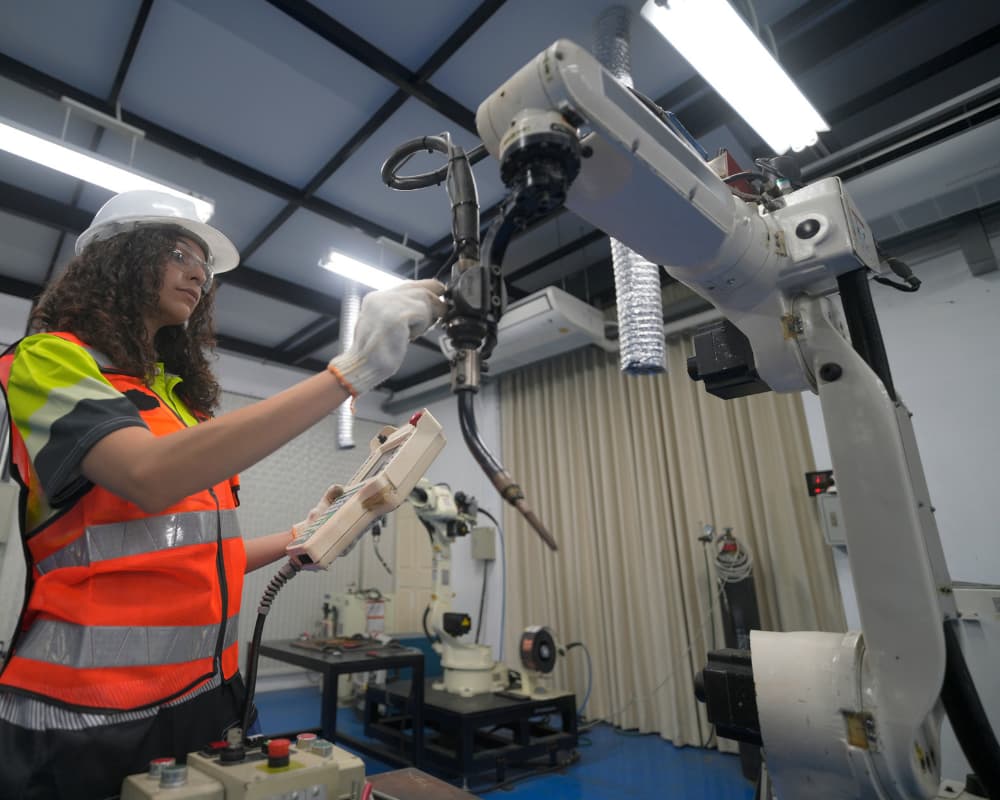
Effective training and workflow integration are critical for overcoming employee resistance and realizing maximum efficiency. Training should be hands-on, focusing on how to safely interact with the cobot, perform basic programming using the intuitive teach pendant (often a tablet interface), and perform routine maintenance checks. It is essential to communicate that the cobot is an augmenting tool, not a replacement, freeing humans from dull, dirty, or dangerous tasks. Best practice involves starting with a simple, high-impact application (a pilot project) and allowing employees to champion the technology, thus fostering a positive culture of smart manufacturing integration.
Industry Applications
The versatility and ease of redeployment inherent in cobot design allow them to address diverse needs across small manufacturing operations.
Assembly Lines and Packaging
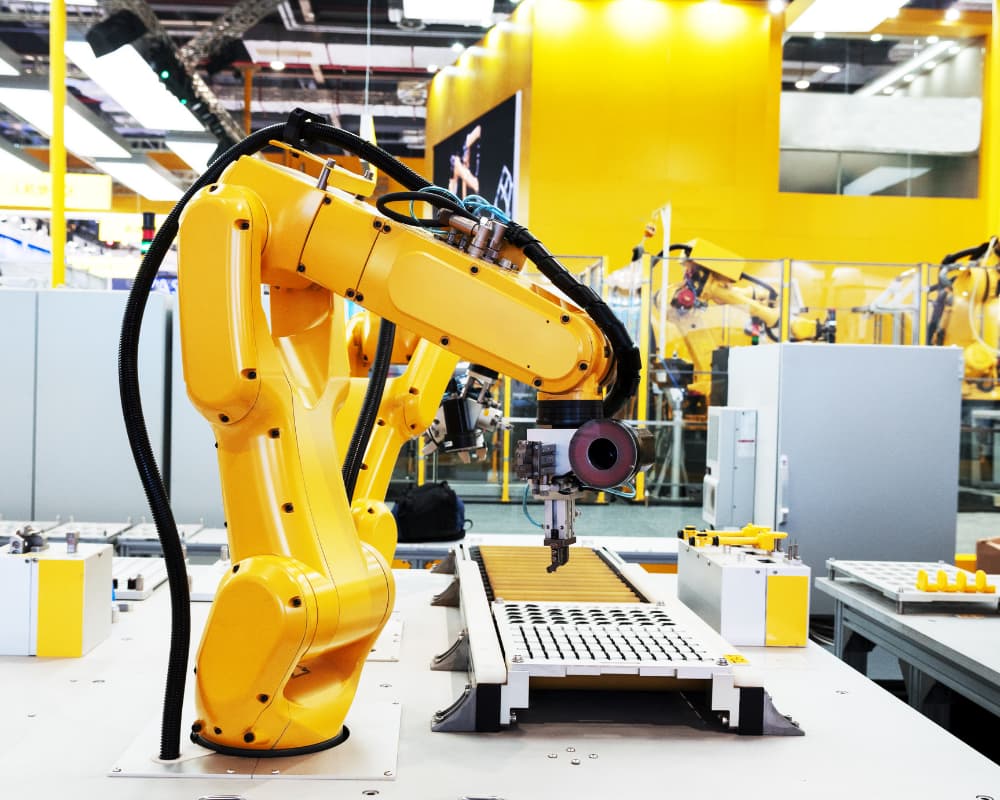
In many SMEs, cobots are first deployed in assembly lines and packaging. They excel at high-volume, repetitive pick-and-place operations, precisely picking small components and placing them into fixtures or circuit boards. In packaging, they can automate palletizing or box-packing tasks, which are often ergonomically stressful for human workers, handling variable product sizes with quick tool changes (grippers). This ensures consistent speed and quality, even for multi-shift operations.
Quality Control and Material Handling
Cobots are increasingly used in quality control and material handling. Fitted with high-resolution vision cameras, a cobot can precisely position a part under the camera or sensor for automated inspection. Since the cobot’s movement is highly repeatable, it ensures consistent lighting and positioning for every check. In material handling, cobots perform machine tending—loading and unloading parts from CNC machines or injection molding machines—allowing the human operator to focus on setup, programming, and monitoring multiple machines simultaneously, leveraging the full potential of industrial robotics.
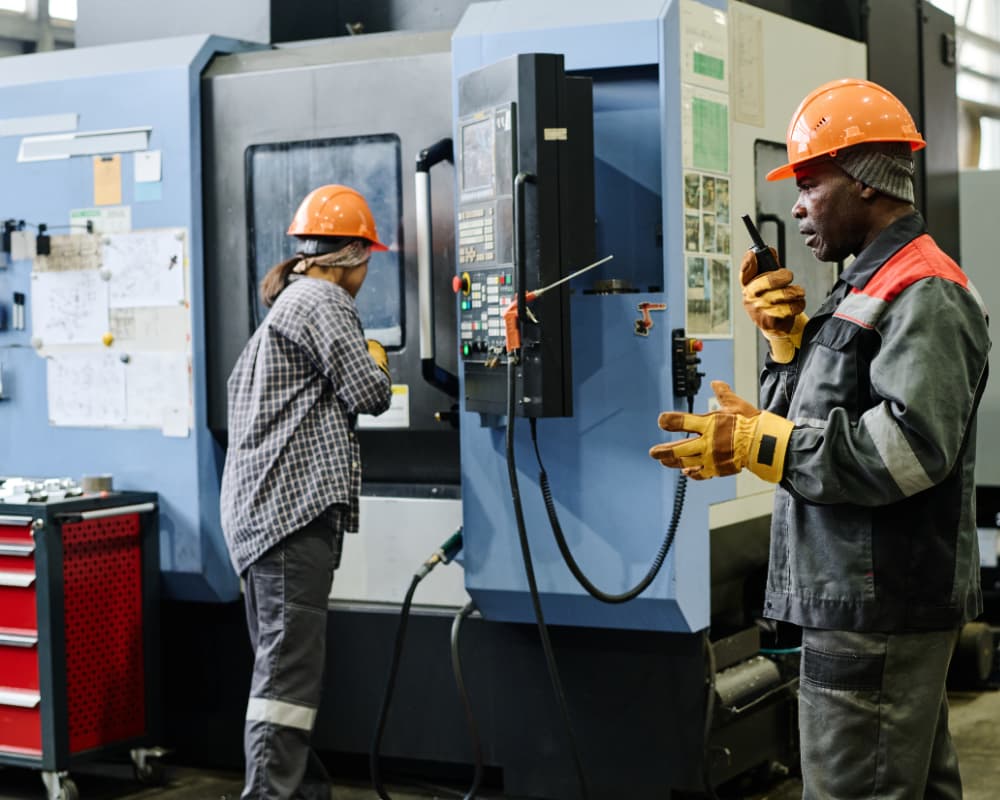
Future of Human-Robot Collaboration
The capabilities of cobots will continue to expand, driven by increasing intelligence and greater integration into the factory’s digital ecosystem.
AI-Enhanced Cobots
The next generation will be AI-Enhanced Cobots that move toward true cognitive collaboration. By integrating advanced machine learning and real-time sensor fusion (combining visual, force, and acoustic data), these cobots will be able to learn new tasks simply by watching a human perform them (learning-by-demonstration). This will drastically reduce programming time, making them even more accessible to SMEs. Furthermore, AI will allow them to anticipate human movement and intent, leading to smoother, more natural interactions and even safer human-robot collaboration.
Scaling Automation in SMEs
The future of small factory automation will see scaling automation in SMEs become seamless. With increasing interoperability standards, cobots will easily integrate with other digital tools, such as Manufacturing Execution Systems (MES) and centralized data platforms. SMEs will be able to start with one cobot and scale incrementally, adding specific modules or units as business demands grow, without complex integration hurdles. This modular, low-risk scaling strategy will solidify the cobot’s role as the primary catalyst for smart manufacturing adoption among small businesses globally.