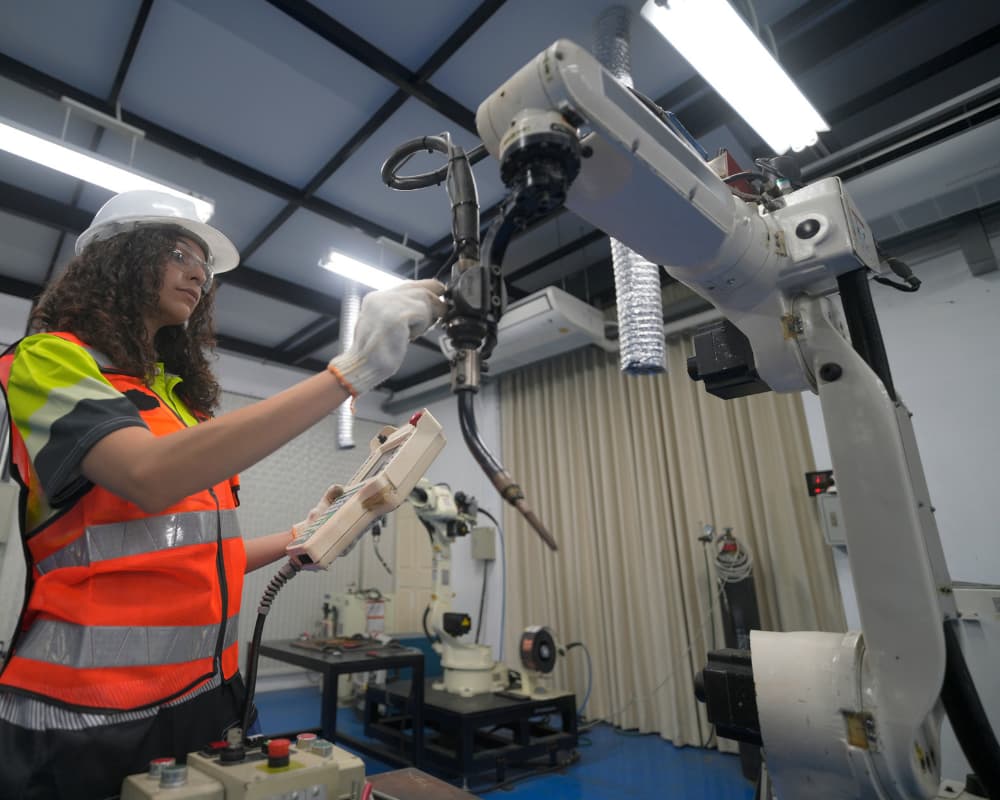
The integration of Artificial Intelligence (AI) into robotic systems is driving an industrial renaissance, transforming traditional, rigid assembly lines into flexible, adaptive, and highly intelligent production environments. This convergence of AI-powered robotics manufacturing has fundamentally changed the scope of industrial robots, moving them past simple, repetitive movements to genuine autonomous decision-making. By leveraging advanced sensory data and machine learning algorithms, smart assembly lines are achieving new benchmarks in quality, speed, and operational efficiency, defining the future of automation.
Introduction to AI-Powered Robotics
From Traditional Robots to Intelligent Systems
For decades, industrial robots were categorized as traditional automation devices, performing tasks that were programmed meticulously and executed within highly structured, unchanging environments. These robots were powerful and fast but fundamentally blind and unintelligent; if a component was slightly misaligned or dropped, the robot would fail to adapt, continuing its pre-programmed path.
The current generation of AI-powered robotics manufacturing has overcome this limitation. AI provides the “brain” to the robot’s mechanical “body.” By integrating machine learning, computer vision, and advanced sensors, modern robots can perceive their environment, learn from data, and make real-time, context-aware decisions. This shift transforms simple automation into true autonomy, allowing robots to handle variability and complexity on the assembly line.
AI’s Role in Modern Automation
AI-powered robotics is the engine driving the sophistication of modern automation. Its primary role is to manage variability, which is the biggest challenge in any production line. AI handles three critical functions:
- Perception: Using sophisticated vision systems, AI allows robots to locate, identify, and determine the precise orientation of objects, even those randomly placed or slightly deformed.
- Cognition: Machine learning algorithms enable the robot to process sensory input, analyze optimal courses of action, and decide on the best path or grip method without being explicitly programmed for every scenario.
- Adaptation: Through techniques like reinforcement learning, AI allows robots to learn from past attempts (successes and failures) and continuously refine their performance over time, ensuring tasks are completed faster and more accurately with each cycle.
Benefits for Industrial Assembly Lines
The introduction of AI-powered robotics manufacturing delivers cascading benefits that drastically improve productivity and quality across the assembly line.
Precision and Speed Enhancement
AI-powered robots enhance performance by optimizing both precision and speed enhancement simultaneously. AI-driven vision and force-torque sensors provide micron-level feedback during intricate assembly operations, such as placing tiny electronic components or inserting pins into tight tolerances. This is a level of consistent precision that far surpasses human capability, especially over long shifts. Furthermore, AI optimizes motion planning, allowing the robot to execute its task with the fastest, most efficient path possible, leading to shorter cycle times and increased overall throughput. The ability to make dynamic, real-time adjustments ensures that speed does not come at the expense of accuracy.
Reduced Downtime and Human Error
By achieving greater autonomy, AI-powered robotics manufacturing leads directly to reduced downtime and human error. AI enables robust predictive maintenance by monitoring the robot’s own health—analyzing motor current, temperature, and vibration data to forecast when a component (like a servo motor or bearing) is likely to fail. Maintenance can then be scheduled proactively, eliminating costly, disruptive unplanned downtime. The sheer consistency of AI-driven assembly also virtually eliminates human-related defects, rework, and waste, ensuring a higher First-Pass Yield (FPY) and significantly lowering operational costs.
Key Technologies
The advanced capabilities of these industrial robots rely on the integration of several cutting-edge AI and sensor technologies.
Machine Learning and Vision Systems
Machine Learning and Vision Systems are central to the intelligence of modern robots. Machine Learning algorithms, particularly deep learning, are trained on vast datasets of images and operational logs, allowing the robot to recognize thousands of different objects, their poses, and the optimal gripping points. Vision systems, comprising high-resolution cameras, 3D sensors (like LiDAR or structured light), and advanced lighting, provide the visual input. The ML model interprets this complex visual data to guide the robot’s arm and end-effector with extreme accuracy, enabling tasks like random bin picking (picking jumbled parts from a container) which were previously impossible for fixed automation.
Collaborative and Autonomous Robots
The shift to AI-powered robotics manufacturing is highlighted by the rise of collaborative robots (cobots) and fully autonomous robots. Cobots are designed with safety features and AI-driven force-sensing technology that allows them to work directly alongside human employees without safety cages. They handle repetitive, strenuous, or dangerous tasks, acting as assistants. Autonomous robots, utilizing advanced AI navigation and planning algorithms, can perform complex tasks, such as transporting materials or performing mobile inspections, making decisions about route planning and object avoidance entirely independently. This flexibility is a key enabler for smart assembly lines.
Case Studies
The transformative impact of AI-powered robotics manufacturing is evident across industries demanding high complexity and extreme consistency.
Automotive and Electronics Industries
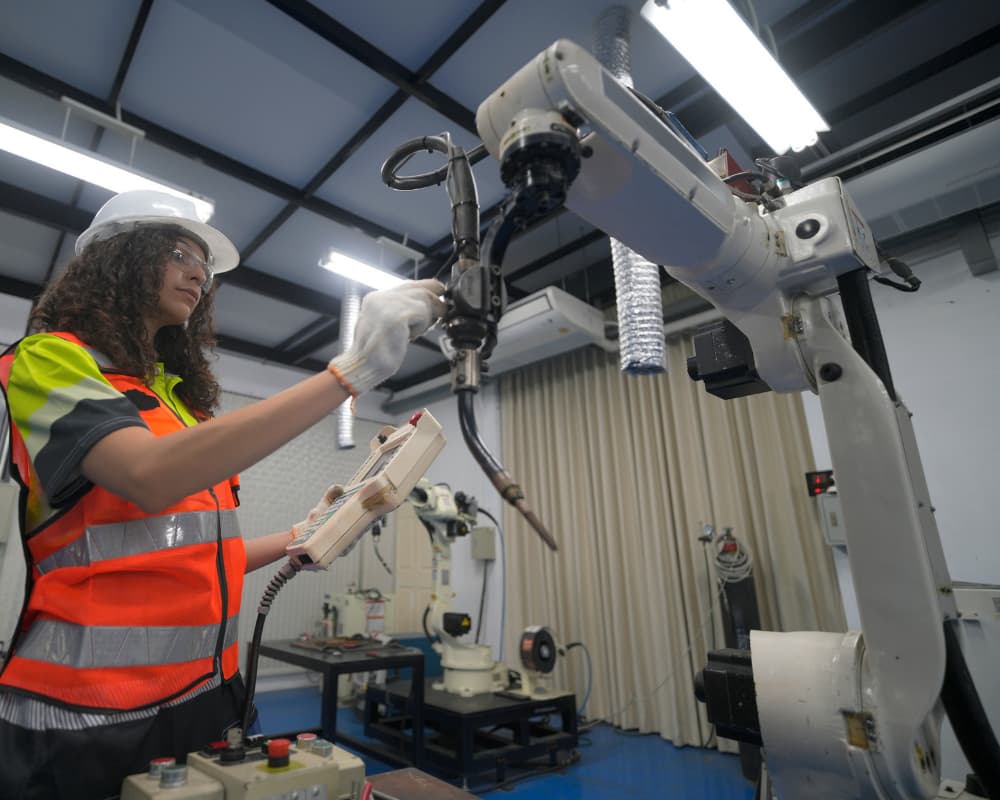
The automotive industry was an early adopter of robotics, but AI has supercharged its assembly capabilities. AI-powered robotics now handle intricate welding and spot-gluing tasks, dynamically adjusting the tool path to account for minute variations in the car body’s structure in real-time. In the electronics industries, where components are microscopic and tolerances are razor-thin, AI vision systems guide robots to assemble microchips and solder tiny components with flawless accuracy and consistency, drastically reducing defects in products like smartphones and circuit boards. This level of precision is non-negotiable for competitive high-tech manufacturing.
Packaging and Logistics Sectors
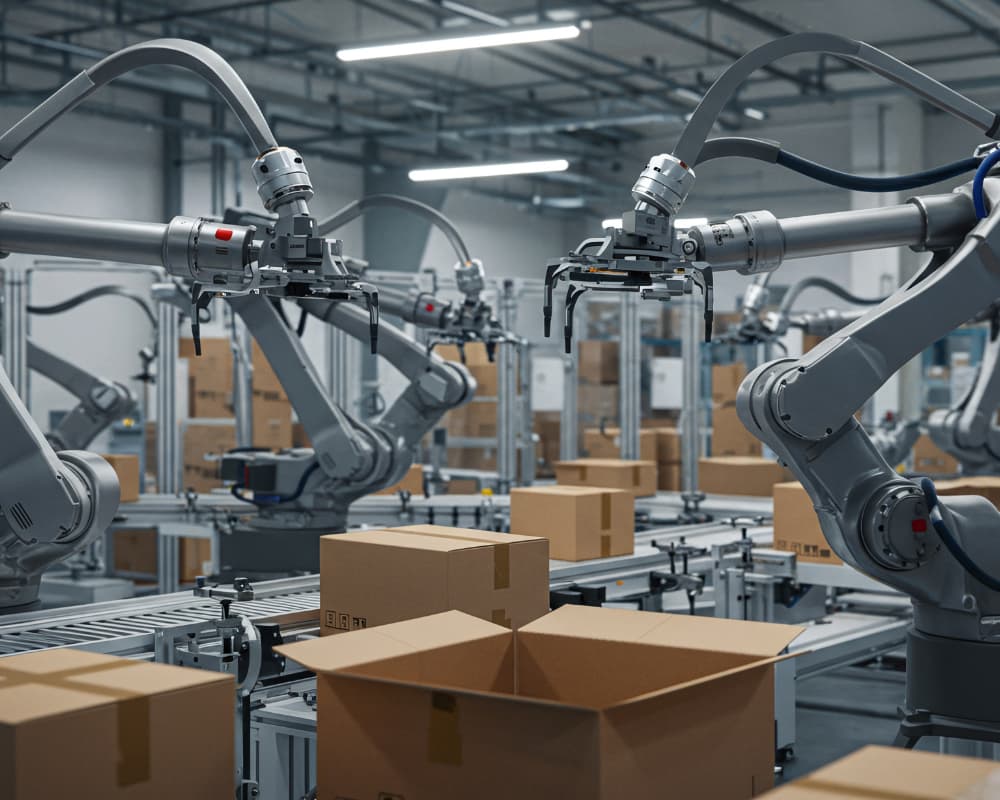
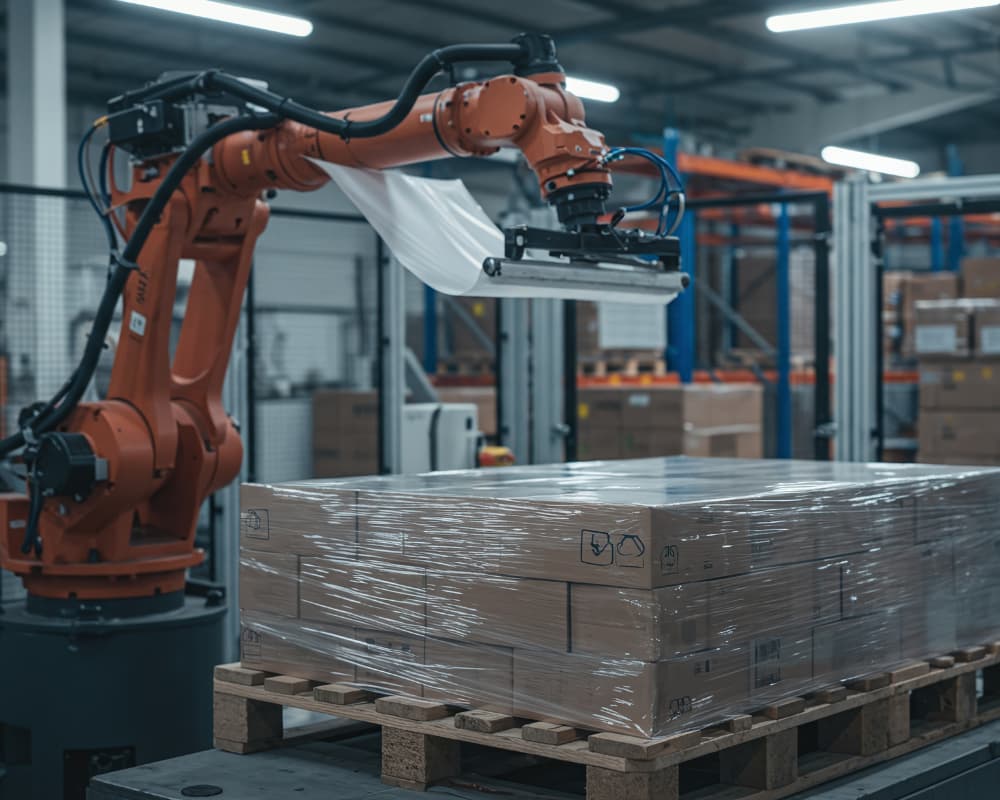
In the packaging and logistics sectors, the challenge lies in variability and high speed. AI-driven systems excel at both. Robots equipped with AI can efficiently pick, sort, and package items of different shapes, sizes, and weights instantly, without prior programming for each item. In logistics, Autonomous Mobile Robots (AMRs) use AI to dynamically navigate busy warehouse floors, optimizing delivery routes and avoiding obstacles (humans, forklifts, other robots) in real-time, streamlining the material flow into the smart assembly lines.
Future of AI Robotics
The current advancements in AI-powered robotics manufacturing are merely precursors to a highly integrated and autonomous future.
Fully Autonomous Assembly Lines
The ultimate goal for AI in production is the creation of fully autonomous assembly lines operating in a “lights-out” environment. This future scenario involves production lines managed end-to-end by AI, from receiving raw materials to final packaging. AI will manage every variable, including process scheduling, machine calibrations, quality control, and predictive maintenance, making decisions autonomously based on market demand and supply chain status. The human role will shift entirely to supervision, system design, and strategic oversight, managing the AI, not the physical labor.
Human-Robot Synergy in Smart Factories
The philosophy of Industry 5.0 emphasizes Human-Robot Synergy in Smart Factories. The future of AI-powered robotics manufacturing will focus on sophisticated collaborative robots that are even more intuitive and safe, learning complex manual tasks simply by observing a human worker (learning-by-demonstration). AI will enable robots to become true partners, assisting humans with heavy lifting, repetitive quality checks, and data analysis, thereby augmenting human skills and creativity rather than simply replacing labor. This collaboration will be the key to unlocking the highest level of flexibility and responsiveness in the smart assembly lines of tomorrow.