The contemporary industrial landscape is defined by volatility, rapid technological change, and an unrelenting consumer demand for customization. In this environment, rigid, single-purpose production lines are becoming obsolete. The modern solution lies in modular machinery, a design philosophy that is fundamentally reshaping industrial automation. By providing unparalleled scalability and customization trends, modular systems are the core technology enabling true flexible manufacturing and ensuring that production facilities can adapt instantly to shifting market requirements.
Introduction to Modular Machinery
Definition and Key Features
Modular machinery refers to industrial equipment designed and built from standardized, self-contained functional units or “modules.” Each module performs a specific process, be it material feeding, processing, inspection, or packaging. These modules are built with standardized interfaces (mechanical, electrical, and digital) that allow them to be easily connected, disconnected, and rearranged.
Key features of this design include:
- Standardized Interfaces: Ensures “plug-and-play” compatibility between components from different vendors or production generations.
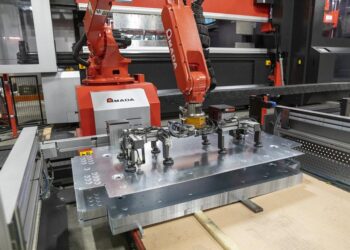
- Self-Contained Functionality: Each module, such as a gripping unit or a drilling station, contains all the necessary components (motors, sensors, controls) to operate independently.
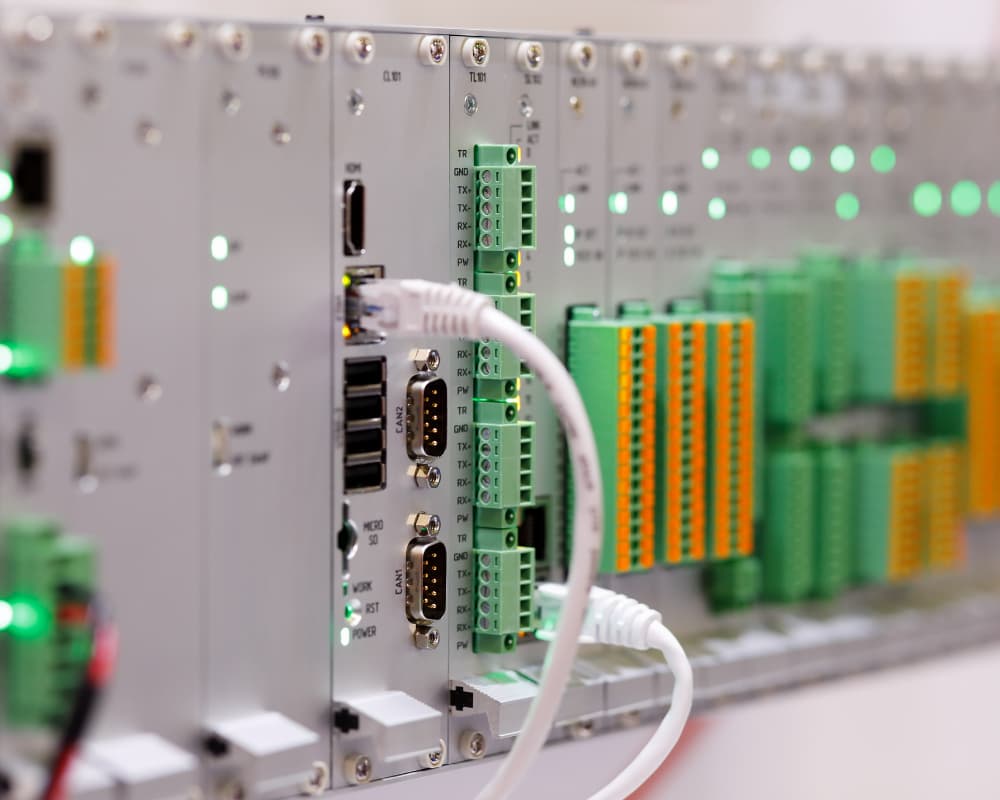
- Decentralized Control: Control functions are often embedded within the module, simplifying the central control system and boosting overall system resilience.
Advantages Over Traditional Machines
The benefits of modular machinery offer a significant competitive advantage over traditional, monolithic machines:
| Feature | Modular Machinery | Traditional Machinery |
| Setup & Changeover | Fast; modules are added/removed with minimal downtime. | Slow; requires extensive retooling and lengthy shutdowns. |
| Investment Strategy | Scalable; capital investment can be phased as demand grows. | Large upfront investment required for full capacity. |
| Repair & Maintenance | Easier; a faulty module can be quickly swapped out. | Time-consuming; requires troubleshooting and repair on the line. |
| Adaptability | High; allows instant reconfiguration for new products/volumes. | Low; designed for a limited range of products/tasks. |
Flexibility in Manufacturing
The primary driver for adopting modular machinery is achieving high levels of flexible manufacturing. This flexibility is defined by the ability to handle various products, volumes, and processes on the same line.
Customizable Production Lines
Modular systems empower customizable production lines built precisely to a product’s specifications. A manufacturer starting a new product line can select only the required processing modules—perhaps a laser cutting module, followed by a precision welding module, and an automated inspection module.
This flexibility in assembly, also known as machine customization, is invaluable for bespoke or low-volume, high-mix production. The line can be physically expanded or contracted by adding or removing processing stations, allowing the factory floor to adapt rapidly to shifts in demand or technology.
Easy Reconfiguration for Different Products
The most powerful feature is the easy reconfiguration for different products. If a manufacturer needs to switch from assembling Product A to Product B, they do not need to build a new line. They simply swap out one or two specific process modules (e.g., changing a gripper type) and rearrange the sequence of the remaining standard modules. This drastically cuts the changeover time from weeks or days to mere hours, directly supporting just-in-time manufacturing and quick response to market trends.
Industry Applications
The demand for scalable production systems and customized output has made modular machinery essential across diverse industrial sectors.11
Automotive and Electronics
In the automotive industry, modular systems allow manufacturers to build multiple vehicle platforms (e.g., internal combustion, hybrid, and electric models) on the same core assembly line. Different body sections or battery pack assemblies can be routed to specific modular stations, enabling unprecedented variety. Similarly, the electronics sector uses modular assembly cells to manage the rapid lifecycle and frequent design changes of consumer devices, quickly reconfiguring lines to handle new circuit board designs or housing materials.
Food and Packaging Industries
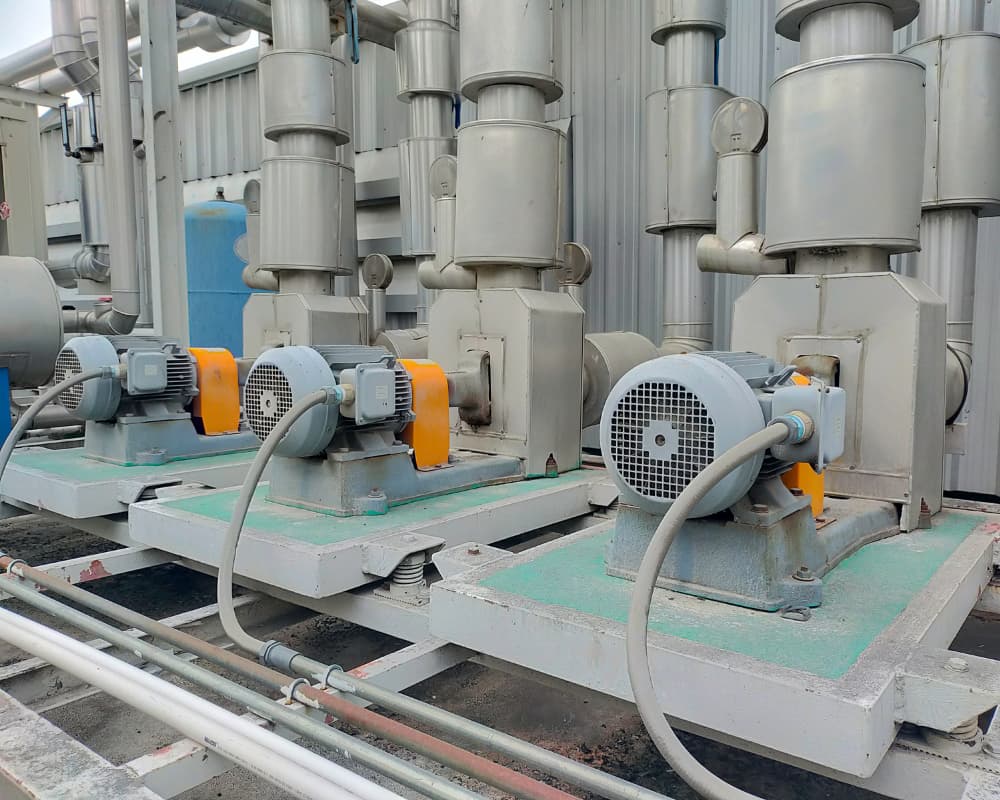
The food and packaging industries benefit hugely from flexible manufacturing. A single filling and sealing line can use interchangeable modular heads to switch seamlessly from bottling soda to canning beer or packaging different sizes of milk cartons. This machine customization ensures high throughput while meeting stringent hygiene standards. Modular “skid-mounted” process units are also common, containing pumps, valves, and control systems that can be moved and integrated quickly across multiple processing facilities.
Scalability and Cost Efficiency
Beyond flexibility, modular machinery is a superior financial model for long-term growth.
Reducing Setup Time and Investment
One of the greatest economic advantages is reducing setup time and investment. Because modules are often fabricated off-site in parallel with facility preparation, project delivery timelines can be shortened by 30% or more. Furthermore, the investment risk is mitigated: companies can start small, investing in a minimum viable production line, and then scale production capacity incrementally by purchasing and integrating additional modules as market demand solidifies. This approach lowers the initial capital expenditure compared to building a fully sized, traditional line from day one.
Integration with Smart Factory Technologies
Modular machinery is perfectly suited for Integration with Smart Factory Technologies. Each self-contained module typically has its own embedded sensors, controllers, and communication interfaces. This decentralization simplifies the overall system architecture, making it easier to integrate with centralized Manufacturing Execution Systems (MES) and cloud platforms. Modules can communicate their status, performance metrics, and energy consumption independently, providing precise, real-time data for AI-driven process optimization and industrial automation.
Future Trends
The next generation of modular machinery will be defined by advanced intelligence and interconnectedness.
AI-Driven Modular Systems
The future involves AI-Driven Modular Systems capable of self-optimization and autonomous reconfiguration. Machine Learning (ML) algorithms will analyze production data and consumer orders to determine the most efficient line layout and process flow. If a part defect rate rises, the AI could autonomously route production away from a struggling module to an alternative module until maintenance is performed. This level of autonomous adjustment will dramatically improve efficiency and reliability in scalable production systems.
Industry 5.0 Adaptation
Moving into Industry 5.0, the focus shifts to human-machine collaboration and sustainability. Modular machinery is central to this trend because it allows production cells to be safely rearranged to accommodate human workers alongside robots (cobots). Furthermore, the ability to reuse and relocate modules across different facilities or projects inherently supports the Circular Economy—an essential component of modern industrial sustainability. Modular machinery is not just about producing parts; it is about creating resilient, human-centric, and sustainable production systems.