The integration of Machine Learning (ML) in CNC machining is ushering in a new era of smart manufacturing, moving industrial processes from fixed automation to adaptive intelligence. By analyzing vast amounts of data, ML algorithms are fundamentally transforming how machines operate, enabling CNC efficiency gains, increased accuracy, and unprecedented levels of toolpath optimization. This article details how this revolutionary application of AI in machining is enhancing precision and maximizing output across the factory floor.
Introduction to Machine Learning CNC
Overview of Machine Learning Applications
Machine Learning refers to computer systems that learn and adapt without explicit programming, relying instead on patterns and inferences derived from data. In the context of CNC machining, ML models are applied to complex, data-rich problems that traditional static algorithms struggle to solve. Key applications include:
- Predictive Machining and maintenance, where models forecast equipment failures or tool wear.
- Process Parameter Optimization, where algorithms suggest optimal spindle speeds, feed rates, and depth of cut based on material, tool condition, and desired surface finish.
- Quality Control, where image recognition models identify subtle surface defects in real-time.
Benefits Compared to Traditional Programming
Traditional CNC programming relies on fixed G-code commands and operator-derived experience, often leading to conservative settings that prioritize safety over CNC efficiency. If a component’s material hardness varies slightly, the traditional program cannot adapt.
In contrast, Machine Learning in CNC offers dynamic, adaptive control. The ML system continuously learns from every part produced, automatically adjusting parameters to maintain optimal performance. This leads to higher material removal rates, reduced scrap, and the ability to handle process variations instantaneously, providing a significant competitive edge over static programming methods.
Optimizing Toolpaths with AI
The most direct and impactful application of AI in machining is in optimizing the cutting strategy itself—the toolpath.
Predictive Tool Wear and Life
Tool wear is a major variable that impacts both cost and quality. A worn tool can increase cutting forces, leading to poor surface finish and potential part rejection. Traditional methods rely on fixed-interval tool changes, often wasting tools that still have life remaining.
Machine Learning addresses this through predictive tool wear modeling. By analyzing real-time data from vibration sensors, spindle power consumption, and acoustic emissions, ML algorithms learn the unique “signature” of a tool approaching failure. The model forecasts the tool life accurately, ensuring the tool is used for its maximum effective lifespan before being replaced, which significantly reduces consumable costs and prevents mid-cut failures.

Reducing Cycle Time and Material Waste
ML algorithms are adept at processing complex constraints—material strength, thermal expansion, machine rigidity, and required tolerance—to generate the most efficient toolpath optimization.
- Cycle Time Reduction: ML models can identify non-value-added movements (air cuts, slow rapid transitions) and streamline the cutter engagement strategy, resulting in faster and smoother movements. This dynamic optimization ensures the machine operates at its technical limit without compromising safety or part integrity, leading to immediate CNC efficiency improvements and a reduction in cycle time.
- Material Waste Reduction: By accurately predicting chatter (vibration) and thermal deformation, the ML system adjusts parameters before defects occur. This proactive control minimizes scrapped parts, making the entire production process more sustainable and cost-effective.
Integration with CNC Machines
For Machine Learning in CNC to function, robust data collection and software interfaces are essential.
Sensors and Real-Time Data Collection
The intelligence of AI in machining is fueled by data collected via advanced sensors and real-Time data collection systems. These IoT (Internet of Things) sensors are strategically placed on critical components:
- Acoustic Emission Sensors: Capture the high-frequency sounds of the cutting process, sensitive to subtle changes in material engagement and friction.
- Power/Current Sensors: Monitor spindle and axis motor loads, indicating cutting forces and stress on the machine.
- Vibration and Temperature Sensors: Provide crucial condition monitoring data to track the health of bearings, gears, and ball screws.
This real-time data forms the feature set used by ML models to make instantaneous decisions, moving machining from a pre-programmed process to a constantly adapting one.
CAD/CAM Software Enhancements
The outputs of the ML models are implemented through advanced CAD/CAM software enhancements. Modern CAM systems now incorporate AI modules that go beyond geometric calculations.
- Feature Recognition: AI quickly analyzes a part’s geometry from the CAD model and suggests optimal machining strategies based on thousands of past jobs.
- Physics-Informed Models: CAM software uses ML to fine-tune G-code. For instance, the software might use a predictive machining model to automatically vary the feed rate within a single pass to maintain a constant chip load on the cutter, even as the depth of cut changes rapidly. This ensures optimal CNC efficiency and tool utilization.
Industry Applications
The impact of Machine Learning in CNC is particularly profound in industries where precision, high volume, and cost control are paramount.
Automotive Parts Production
In automotive parts production, high throughput and consistency are key. ML helps manufacturers manage the demands of mass production while maintaining tight quality control. AI models monitor the state of high-volume machining centers—like those making engine blocks or transmission cases—to preemptively identify tooling faults that could lead to batches of scrap. Furthermore, toolpath optimization allows these facilities to shave seconds off the cycle time for millions of parts, resulting in massive cumulative cost savings and huge gains in CNC efficiency.
Aerospace and High-Precision Manufacturing
For aerospace and high-precision manufacturing, materials like titanium and nickel alloys are notoriously difficult to machine. A single scrapped component can cost tens of thousands of dollars. AI in machining is critical here because it provides the required assurance of quality. ML models analyze minute variations in material grain structure and cutting conditions, allowing the machine to adjust speed and feed rates to avoid material hardening and micro-cracking, guaranteeing that parts meet the stringent quality and safety standards required for flight components. This reliance on predictive machining minimizes waste and maximizes safety.
Future Trends
The integration of Machine Learning in CNC is merely beginning, with future developments pointing toward highly intelligent and autonomous factory floors.
AI-Enhanced Hybrid Machining
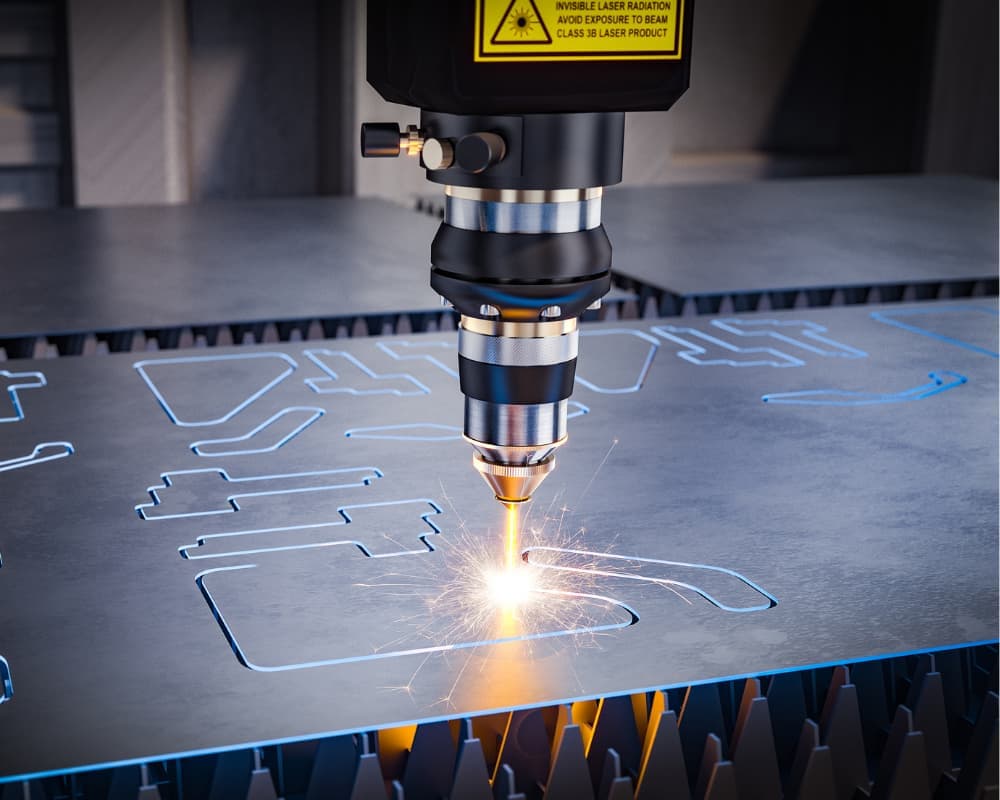
The future lies in AI-Enhanced Hybrid Machining systems that integrate additive and subtractive processes. ML will play a crucial role in managing the complex thermal and material stresses inherent in these combined processes. An AI model could manage the laser power during an additive layer deposition while simultaneously calculating the optimal cooling time and the subsequent toolpath optimization for the subtractive finishing pass. This level of integrated control will unlock the ability to produce highly complex, optimized components with minimal energy and material waste, significantly boosting industrial sustainability and CNC efficiency.
Fully Autonomous CNC Production
The ultimate vision is Fully Autonomous CNC Production. In this factory of the future, Machine Learning systems will handle every stage of the manufacturing process without human intervention:
- Order Analysis: AI analyzes the incoming CAD file and automatically selects the required material, machine, and tooling.
- Toolpath Generation: ML generates and simulates the optimal toolpath, correcting for predicted machine deflection and thermal drift.
- Execution and Correction: Predictive machining models monitor the cutting in real-time and dynamically adjust parameters to maintain quality.
- Self-Correction: Upon detecting a confirmed failure, the system automatically swaps the faulty tool and reroutes subsequent jobs to another available machine, achieving true lights-out smart manufacturing. This represents the highest form of CNC efficiency and operational resilience.