The convergence of Artificial Intelligence (AI) and the Industrial Internet of Things (IIoT) is rapidly redefining the landscape of modern production. This AI and IoT Integration is not merely a technological upgrade but a fundamental shift toward connected manufacturing, where every machine and sensor contributes to a vast, intelligent data ecosystem. This fusion unlocks capabilities previously confined to theory, enabling smarter machinery that can learn, adapt, and predict outcomes with unprecedented accuracy. By leveraging real-time monitoring and advanced analytics, manufacturers are gaining deep operational insights that drive efficiency and resilience across the entire value chain.
Understanding AI and IoT Integration
To appreciate the power of AI and IoT Integration, it is crucial to first define the individual components that make up this intelligent system. The synergy between them creates value far exceeding the sum of their parts.
Definition and Core Components
Industrial IoT (IIoT) refers to a network of interconnected sensors, instruments, and other devices networked together with industrial applications. Its core components include physical assets (machinery), sensors that gather data from these assets (industrial IoT devices), communication networks (wired or wireless), and a centralized platform for data aggregation. IIoT provides the foundational infrastructure—the digital nervous system—that gathers the raw, massive streams of operational data, often referred to as “Big Data.” This continuous flow of information covers everything from temperature and vibration to pressure and current consumption.
Artificial Intelligence (AI), specifically Machine Learning (ML), refers to the algorithms and models that process this data. AI and IoT Integration provides the intelligence, the cognitive function, that analyzes patterns, identifies anomalies, and makes predictions. It transforms raw numbers into meaningful insights and actionable recommendations.

How AI Complements IoT Systems
The primary role of AI and IoT Integration is to convert the volume and velocity of IoT data into tangible value. IIoT systems excel at collection and transmission, but without AI, the data would remain an unmanageable flood. AI complements IoT by providing:
- Pattern Recognition: AI models, particularly unsupervised learning algorithms, can automatically detect subtle correlations and recurring patterns in massive datasets that would be impossible for human operators to spot.
- Contextualization: AI adds context to sensor readings. For example, it determines if a high-temperature reading is normal (during ramp-up) or indicative of failure (during steady-state operation), differentiating noise from signal.
- Automation of Decision-Making: AI allows the system to make real-time, automated adjustments to control systems, optimizing machine parameters instantly without human intervention, thereby enabling truly smarter machinery.
Benefits of Integration
The successful AI and IoT integration results in a powerful manufacturing system capable of self-optimization and heightened operational awareness.
Real-Time Data Insights
The greatest immediate benefit is the delivery of real-time monitoring and sophisticated data insights. Instead of receiving status updates every few minutes or hours, operations managers and engineers get continuous, live streams of information about every asset’s performance. This capability allows for instantaneous anomaly detection. If a CNC spindle begins drawing excessive power due to increased friction, the system alerts maintenance within seconds. This immediate feedback loop ensures that operational variables, quality checks, and process controls are managed dynamically, ensuring products remain within tolerance and maximizing connected manufacturing efficiency. This shifts the focus from analysis after the fact to real-time insights during production.
Predictive Maintenance and Optimization
AI and IoT integration takes real-time monitoring a step further by enabling highly accurate predictive analytics for maintenance. Instead of scheduling maintenance based on arbitrary time intervals or waiting for failure, ML algorithms analyze the historical and current industrial IoT data (vibration, acoustics, motor load) to calculate the precise “time-to-failure” for a component. This capability allows manufacturers to schedule repairs exactly when they are needed, minimizing unplanned downtime and maximizing the operational life of expensive assets. Furthermore, AI continually optimizes processes by analyzing the energy consumption and throughput of different machine settings, suggesting optimal parameters to maximize CNC efficiency and reduce waste.

Implementation Strategies
Successfully deploying an AI and IoT Integration requires careful planning and robust infrastructure to manage data flow and security.
Data Collection and Edge Computing
The sheer volume of data generated by industrial IoT sensors—often terabytes per day—necessitates a tiered processing approach. This is where Edge Computing becomes essential. Edge devices (gateways or dedicated industrial computers) are deployed close to the machines on the factory floor. These devices perform initial data filtering, aggregation, and pre-processing, allowing basic real-time monitoring decisions to be made locally without latency. Only summarized, relevant data is then sent to the central cloud or data center for deeper, long-term predictive analytics and complex model training. This strategy reduces bandwidth requirements and latency, making the AI and IIoT integration far more responsive.
Connectivity and Security Challenges
Implementing connected manufacturing poses significant challenges related to network infrastructure and cybersecurity. Reliable, low-latency connectivity (often requiring 5G or advanced local wireless networks) is essential for real-time monitoring and control. More critically, the interconnected nature of industrial IoT exposes operational technology (OT) systems to cyber threats. Manufacturers must implement robust security protocols, including network segmentation, encryption of data both in transit and at rest, and strict access controls, to protect sensitive production data and prevent malicious interference with smarter machinery. Addressing these challenges is paramount for achieving reliable industrial sustainability.
Industry Use Cases
The practical applications of AI and IoT integration are reshaping efficiency across numerous industrial domains.
Smart Factories and Production Lines
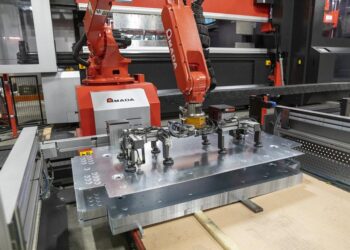
In smart factories, the entire production line functions as one unified, intelligent entity. AI in machining uses real-time monitoring data to dynamically adjust robot speeds, conveyor belt rates, and machine tool parameters to maintain optimal flow and quality, even when minor disruptions occur upstream. If an incoming material batch has slightly different characteristics, the AI model instantly recalibrates the cutting or forming process to ensure the final product meets specifications. This adaptability is the hallmark of truly connected manufacturing, eliminating the rigid production constraints of the past.
Energy Management Systems
The AI and IIoT integration delivers powerful results in energy efficiency. Smart Energy Management Systems use IIoT sensors to monitor the energy consumption of every device—motors, HVAC units, and lighting—in real-time monitoring. AI models then analyze this usage pattern against production schedules, weather data, and energy tariffs. The system can predict future energy loads and automatically optimize the usage of large consumers, such as staggering the startup of motors to avoid costly peak demand charges. This application of predictive analytics not only cuts utility costs but also significantly boosts industrial sustainability.
Future Outlook
The trajectory of AI and IIoT integration points toward a future characterized by fully autonomous and self-optimizing industrial ecosystems.
Autonomous Manufacturing Ecosystems
The ultimate goal of connected manufacturing is the realization of Autonomous Manufacturing Ecosystems. In this future, machines will not only predict their own failures but will also communicate with each other, negotiate resource allocation (like energy or shared tools), and even self-reconfigure production routines based on dynamic order queues or component shortages. AI will act as the orchestrator, managing the entire digital twin of the factory floor to ensure continuous OEE optimization with minimal human input. This represents the pinnacle of smarter machinery and seamless industrial IoT operation.
AI-Enhanced Industrial Decision Making
Beyond pure automation, AI-Enhanced Industrial Decision Making will fundamentally change the roles of human managers. AI will process complex market signals, supply chain data, and production metrics far faster than any human team, generating highly accurate forecasts for demand, pricing, and operational risks. Decision-makers will shift their focus from sifting through spreadsheets to acting on highly reliable, synthesized insights provided by the AI system. This higher level of predictive analytics will allow businesses to make strategic, capital-intensive decisions with unprecedented confidence, ensuring long-term competitiveness in the age of smart manufacturing.