The manufacturing sector is progressing through a dynamic phase of digital transformation, moving from the technology-centric focus of Industry 4.0 to the value-driven paradigm of Industry 5.0. While the former successfully introduced connectivity and automation, the latter builds upon this foundation by prioritizing human creativity, sustainability, and resilience. This transition is redefining industrial connectivity and fundamentally changing the design and function of machinery through key enablers like edge computing and collaborative systems.

Overview of Industry 4.0
Key Technologies and Achievements
Industry 4.0 established the foundations of the modern smart manufacturing environment. Its core achievement was the creation of Cyber-Physical Systems (CPS), where machines, systems, and processes are interconnected via the Industrial Internet of Things (IIoT). Key technologies included Big Data analytics, cloud computing, advanced robotics, and the initial deployment of the IIoT. This revolution focused primarily on horizontal and vertical integration across the supply chain, seeking to optimize performance and efficiency through automation and data-driven decision-making. The result was factories capable of self-diagnosis and self-optimization, delivering unprecedented levels of efficiency and mass customization.
Limitations of Current Systems
Despite its revolutionary success, Industry 4.0 revealed certain limitations that Industry 5.0 seeks to address. The heavy emphasis on pure automation often viewed human workers as replaceable cogs in the machinery, leading to concerns about de-skilling and job displacement. Furthermore, the relentless pursuit of efficiency sometimes neglected broader societal and environmental goals. The centralized nature of cloud-based data processing, while powerful, also introduced latency issues for critical, real-time control functions and created systemic fragilities across highly globalized supply chains, exposing a lack of industrial resilience during major disruptions.
Transition to Industry 5.0
The shift to Industry 5.0 represents a philosophical pivot, adding three core pillars to the existing technological infrastructure: human-centricity, sustainability, and resilience. It is not a replacement for Industry 4.0, but an augmentation of its capabilities.
Human-Centric Automation
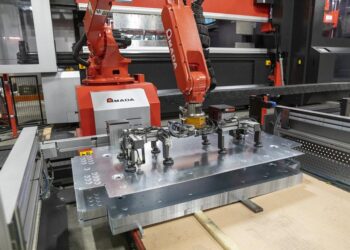
The centerpiece of Industry 5.0 is human-centric automation, which recognizes that humans bring unique value—creativity, critical thinking, and complex problem-solving—that machines cannot replicate. The goal is to move beyond mere automation to human-machine collaboration. This involves deploying advanced technologies like collaborative robots (cobots) and Augmented Reality (AR) tools that work alongside humans, amplifying their capabilities rather than replacing them. Workers are empowered to perform higher-value, non-repetitive tasks, transforming them from factory operators into system supervisors and creative problem-solvers. This philosophy places the well-being and skills of the worker at the forefront of the production process.

Integration of Edge Computing
The demand for real-time control and resilience drives the increased integration of edge computing. While Industry 4.0 relied heavily on the cloud, Industry 5.0 pushes data processing and analytics closer to the source—the machine itself. Edge computing allows critical decisions, such as emergency stops, quality checks, and instantaneous process adjustments, to occur with near-zero latency, circumventing potential network delays. This decentralized processing enhances system resilience, as individual manufacturing cells can continue operating even if the central cloud connection is temporarily lost, ensuring maximum uptime and industrial connectivity integrity.
Connectivity and Smart Factories
Industry 5.0 leverages and refines the core connectivity introduced by its predecessor, making data exchange faster, smarter, and more secure.
Industrial IoT and Real-Time Data
The foundation remains the Industrial IoT (IIoT), but in the context of Industry 5.0, the network is faster and more ubiquitous, often relying on 5G connectivity for ultra-low latency. This robust industrial connectivity enables genuine real-time data exchange from thousands of sensors across the smart manufacturing floor. The sheer volume and speed of this data flow support complex human-machine interactions and immediate process corrections, which are essential for customized production and maintaining system stability under dynamic conditions.
AI and Predictive Analytics in Production
Artificial Intelligence (AI) moves from being a centralized analytical tool to an embedded assistant. Predictive analytics are deployed at the edge to enable smarter machinery to anticipate issues. For instance, AI on a CNC machine can monitor vibration data and instantly adjust spindle speed to prevent chatter before it affects the part quality. This continuous, intelligent feedback loop, powered by AI models trained in the cloud and deployed locally, is the engine of Industry 5.0, guaranteeing efficiency and precision simultaneously.
Benefits of Industry 5.0 Machinery
The shift in focus delivers strategic benefits that address the economic, social, and environmental mandates of the 21st century.
Increased Efficiency and Flexibility
By combining the precision of advanced robotics with the agility and creativity of human workers, Industry 5.0 achieves superior efficiency and flexibility. The enhanced industrial connectivity and use of modular systems allow for rapid, on-demand reconfiguration of production lines. A worker using an AR headset can instantly program a cobot to perform a new task or guide a complex assembly process, cutting changeover times and allowing the facility to produce a higher mix of customized products at high volume—a defining feature of truly smart manufacturing.
Collaboration Between Humans and Machines
The cornerstone benefit is the harmonious collaboration between humans and machines. Technologies like cobots are inherently safe and designed to share the workspace, taking over dangerous, dull, or physically demanding tasks while leaving complex, high-value decision-making to the human operator. This improves worker safety, job satisfaction, and overall output quality, validating the human-centric pillar of Industry 5.0. The machine handles the data; the human provides the intuition and oversight.
Future Outlook
The trajectory of Industry 5.0 points toward a manufacturing future that is resilient, responsible, and fundamentally integrated with digital intelligence.
Sustainable and Resilient Manufacturing
Industry 5.0 places sustainability and resilient manufacturing at the core of industrial strategy, moving beyond mere compliance. AI-driven optimization minimizes waste and energy consumption across the entire product lifecycle, while edge computing and decentralized supply chains build robustness against global shocks. This model views industrial systems as contributors to environmental health, promoting circular economy principles and resource efficiency, which is a key differentiator from the purely economic focus of Industry 4.0.
Emerging Technologies in Industry 5.0
The future of Industry 5.0 will be realized through continued technological evolution. Digital Twins will become more sophisticated, integrating human cognitive models to simulate the impact of decisions on worker well-being and productivity. Blockchain will enhance supply chain transparency for ethical sourcing and sustainability tracking. Ultimately, the fusion of industrial connectivity, real-time edge computing, and human intelligence will create hyper-personalized, self-optimizing, and fully responsible production systems.